
Toy Hauler vs Travel Trailer: Expert RV Comparison
Planning a Utah RV trip usually starts with a simple question and turns into a much bigger one. You might be thinking about a weekend at Bear Lake with the kids, or a Moab run where the UTVs need to come with you. At first glance, a toy hauler and a travel trailer can look close enough that the choice feels mostly cosmetic.
It isn't.
In a real toy hauler vs travel trailer decision, the right answer comes down to how you camp, what you haul, what you tow with, and how comfortable you want the living space to feel once you're parked. Around northern Utah, that decision gets even more practical because towing through the Wasatch isn't the same as pulling across flat country. Payload, hitch weight, braking, and storage all matter fast.
Our team has spent decades helping shoppers sort through that exact choice in Salt Lake City. The buyers who end up happiest are usually the ones who get honest about their actual use. Not the trip they might take once, but the trips they'll take every season.
Introduction
A lot of Utah buyers are choosing between two very different weekends.
One looks like a family campsite near the lake, bikes on the rack, food in the fridge, and enough sleeping room that nobody feels crammed. The other looks like a dusty trailhead, a couple of side-by-sides or dirt bikes in tow, tools packed, helmets by the door, and a campsite that doubles as basecamp.
That's where the toy hauler vs travel trailer question gets real. These RVs may sit in the same towable category, but they were built for different jobs. Modern guides describe toy haulers as a distinct RV category designed specifically to carry large recreational vehicles like motorcycles, quads, dirt bikes, snowmobiles, and golf carts with a rear ramp for loading, while traditional travel trailers stay focused on residential-style camping comfort and storage according to JD Power's toy hauler guide.
For Utah shoppers, that difference affects more than floorplan preference. It affects your truck choice, your mountain towing confidence, your campsite setup, and whether the rig works for the way your family travels.
The Core Difference What Defines Each RV Type
Start with the job the RV needs to do.
A travel trailer is designed around camping comfort. A toy hauler is designed around carrying motorized gear and still giving you a place to sleep, cook, and get out of the weather. For a Utah buyer, that difference shows up fast. A rig that works great for a family weekend at Jordanelle may be the wrong fit for hauling a side-by-side to the dunes or dirt bikes to a trail system.
Travel trailer means living space leads the design
In a travel trailer, the square footage is usually spent on fixed living features. You tend to get a more settled kitchen, a more defined bedroom, better pantry or wardrobe storage, and seating that stays in place instead of converting back and forth. If your cargo is camp gear, fishing tackle, folding chairs, and duffels, that approach usually feels easier to live with.
That is why many families start by looking at family-friendly travel trailer floorplans. The layout is built around people first, not machines.
Toy hauler means the garage shapes the whole coach
A toy hauler starts with a different requirement. It needs to load, secure, and carry heavier equipment safely. That is why you see a rear ramp door, tie-down points, tougher cargo flooring, and a garage area that often converts into sleeping or lounge space once the toys are unloaded. Buyers cross-shopping machines and trailers often use a 2026 offroad vehicle buyer's guide to size the gear first, then match that gear to the RV.
That does not make a toy hauler the better trailer. It makes it the right tool for a specific kind of trip.
In our dealership, this is one of the biggest decision points we see. Buyers often focus on total length or exterior looks, but the key question is simpler. Do you want every foot of the trailer working for camping comfort, or do you need part of that footprint reserved for a garage?
| Feature | Toy Hauler | Travel Trailer |
|---|---|---|
| Primary purpose | Carry powersports gear and provide living space | Prioritize camping comfort and residential-style use |
| Rear cargo access | Ramp door with garage area | Standard entry doors and storage compartments |
| Interior layout | Multi-use rooms and convertible space | More fixed living, dining, and sleeping areas |
| Storage style | Built around gear transport and tie-down capacity | Built around clothing, food, and campground gear |
| Best fit | Riders, off-roaders, and gear-heavy travelers | Families, couples, and comfort-focused campers |
Practical rule: Choose based on what has to ride inside the trailer, not which one looks roomier on the lot.
That one decision clears up a lot. A travel trailer uses its floorplan to make camp life easier. A toy hauler gives up some of that everyday living feel so you can bring the machines that make the trip worth taking.
The Inside Story Floorplans Cargo and Comfort
Floorplans decide how the trailer feels after the truck is parked. For a lot of Utah buyers, that matters just as much as exterior length or cargo specs.
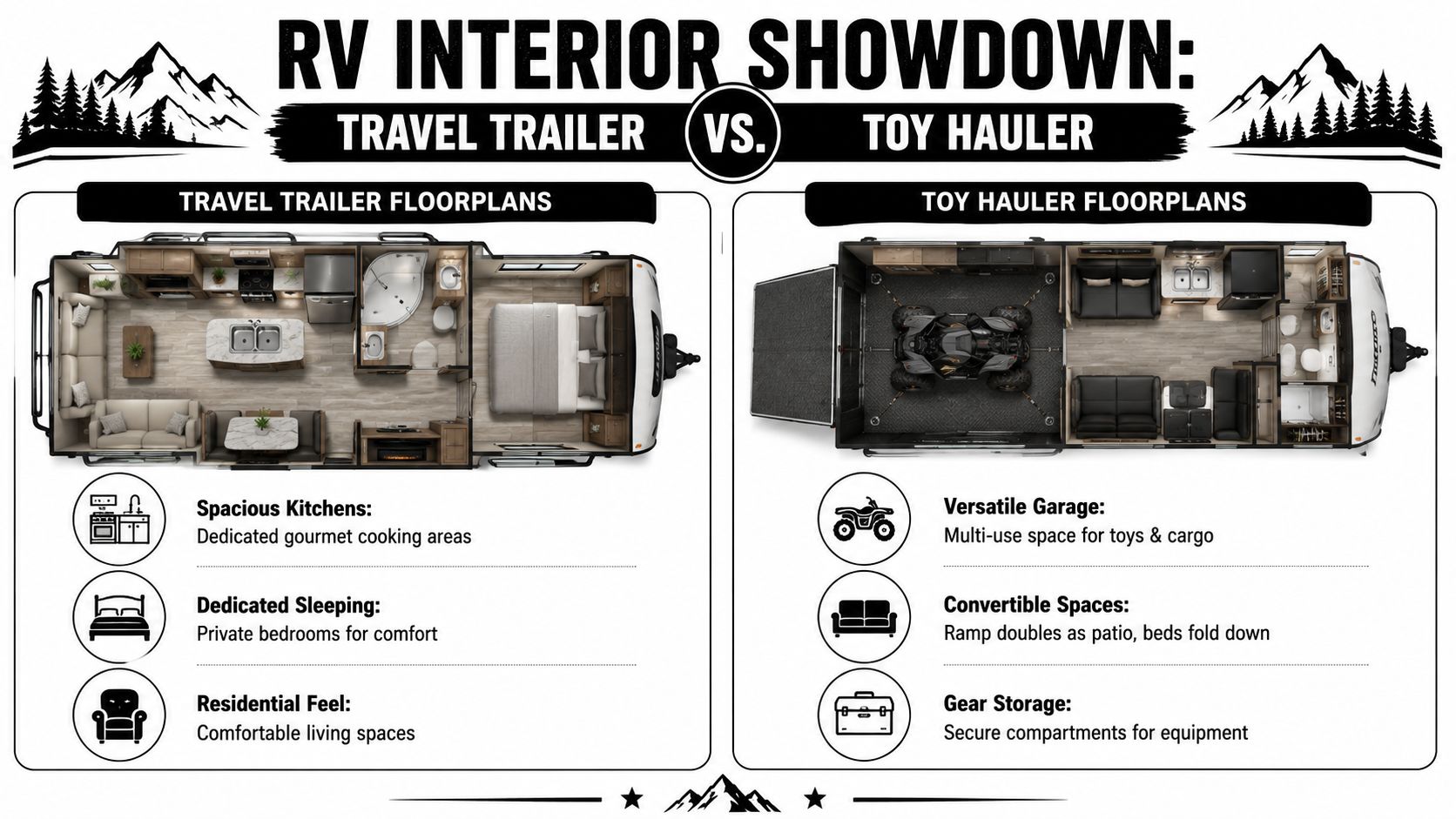
Travel trailer floorplans feel more settled
A travel trailer usually gives more of its footprint to everyday camping comfort. You will often see a defined bedroom, a larger kitchen, more pantry and wardrobe space, and bunkhouse layouts that work well for kids or guests. If the trip looks like cooking at camp, hanging out inside during an afternoon storm, and putting everyone to bed without rearranging furniture, a travel trailer has a clear advantage.
That difference shows up fast on longer stays. Soft storage matters. So does counter space. So does having a dinette or sofa that stays a dinette or sofa all weekend.
Families shopping for that kind of layout often start with travel trailers for families, where bunk capacity and day-to-day livability matter more than garage length.
Toy hauler floorplans trade fixed comfort for flexible use
A toy hauler gives part of the trailer to cargo first, then asks that space to do double duty once you reach camp. The garage carries motorcycles, ATVs, or a side-by-side on the road. After unloading, it can become a sleeping room, a second lounge, a place to wrench on gear, or a hangout area with the ramp patio open.
That setup works well for Utah riders. One trailer can handle trail machines for Moab, sand gear for the dunes, or dirt bikes for a weekend south of Salt Lake City, then still sleep the crew at night.
The trade-off is real. A garage takes square footage away from the kitchen, main bedroom, wardrobes, and fixed seating. Buyers who do not regularly bring large gear usually notice that loss right away. Buyers who do bring it usually see the garage as the feature that makes the trip possible.
Cargo needs shape the whole interior
Cargo capacity changes how the trailer is built, but the daily effect is felt inside. Toy haulers commonly have reinforced floors, tie-down points, wider open rear space, and furniture designed to fold, raise, or move out of the way. Travel trailers usually use that same area for permanent cabinets, bunks, larger living rooms, or more residential storage.
In practice, that means a toy hauler often feels more utilitarian in the back, while a travel trailer feels more settled from front to rear. Neither approach is better on its own. It depends on what has to come with you.
I always tell buyers to make a real gear list before judging a floorplan. If you are still sorting out whether your camping style really calls for machines, this 2026 offroad vehicle buyer's guide can help you size the vehicle side of the equation before matching it to a garage.
| Feature | Toy Hauler | Travel Trailer |
|---|---|---|
| Floorplan priority | Garage plus convertible living | Dedicated living and sleeping areas |
| Interior feel | Flexible, utility-driven, multi-use | More fixed, residential, camp-comfort focused |
| Storage style | Built around gear space and adaptable furniture | More closet, pantry, and household-style storage |
| Best for | UTVs, dirt bikes, motorcycles, heavy gear | Family camping, longer stays, comfort-driven trips |
Garages are great when you need them. They feel like wasted square footage when you do not.
Towing and Payload in the Mountain West
Many buyers find themselves surprised. A floorplan can feel perfect on the lot and still be the wrong RV for your truck, your hitch setup, or the roads you'll drive in Utah.
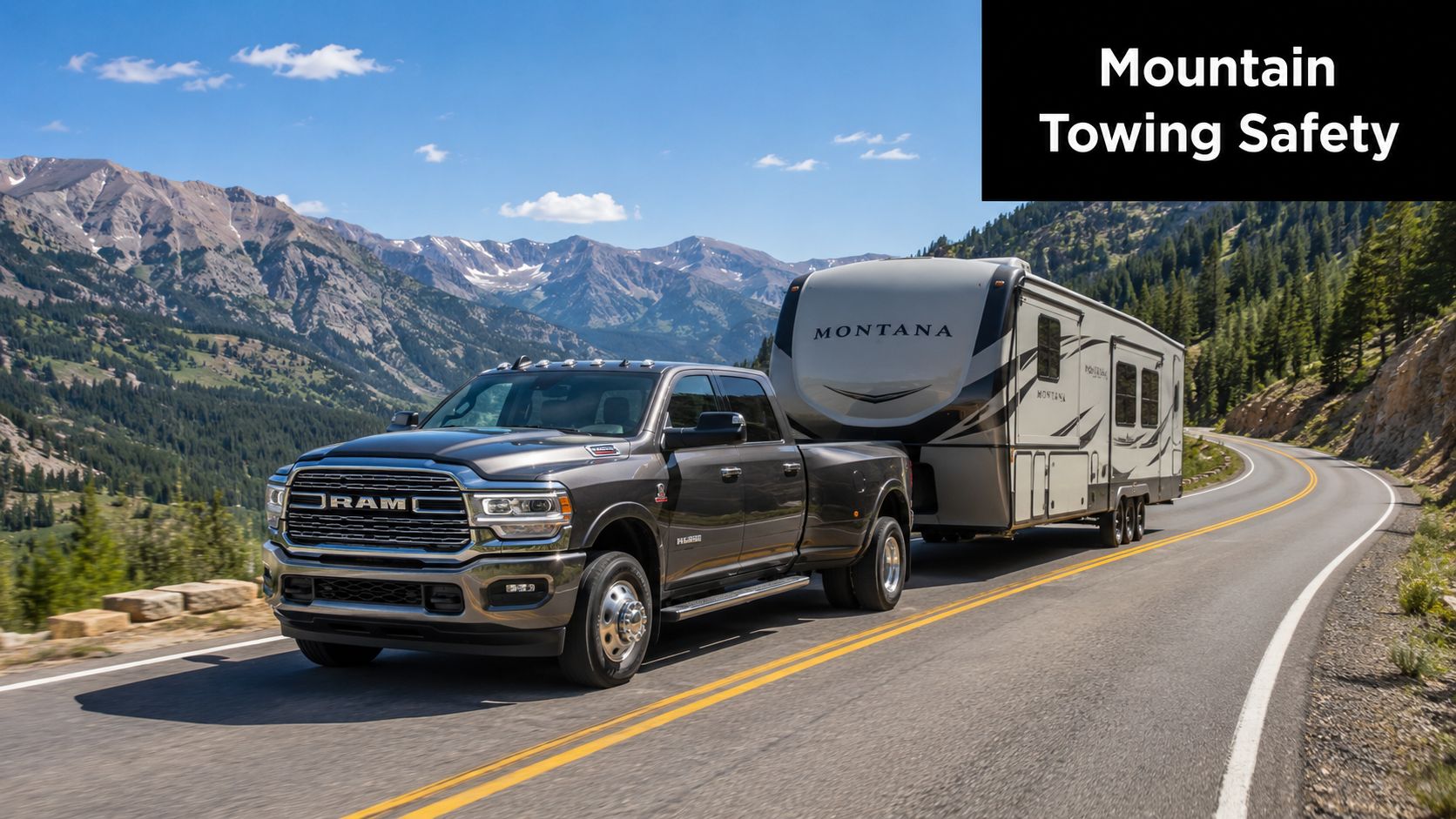
Mountain towing exposes weak matches fast
A representative travel trailer example, the Jayco Jay Flight 265TH, is listed with a GVWR of 7,500 to 8,500 pounds and hitch weight of 845 to 930 pounds, which typically fits within a 1/2-ton to 3/4-ton towing envelope depending on options and payload in this RV weight comparison. A large fifth-wheel toy hauler example, the Jayco Seismic 4113, is listed at 20,695 pounds GVWR with a loaded pin weight potentially above 4,200 pounds, requiring a one-ton dually for safe real-world operation in that same source.
Those are not small differences. They change the truck, the hitch, the ride, the braking feel, and the stress level on steep grades.
Around the Wasatch, that matters every trip. Pulling through Parley's, climbing toward higher camp elevations, or descending long grades with crosswinds puts a spotlight on poor payload planning. A truck that “can pull it” on paper may still be a bad fit once passengers, gear, hitch hardware, and mountain conditions enter the picture.
Payload matters as much as tow rating
A lot of shoppers fixate on tow rating because it's easy to find in marketing material. Payload is usually the limiter. Hitch weight on a travel trailer or pin weight on a fifth wheel has to live within the truck's real-world carrying ability after people and cargo are added.
If you want a plain-language refresher on that topic, Solana EV's guide on payload capacity is a helpful starting point before you compare truck labels to RV specs.
Our team also points shoppers to practical brake setup guidance because stopping control is part of the decision, not an afterthought. This overview on camper brake controllers is worth reading before you finalize a towable setup.
Shop-floor advice: Read the stickers on the truck and the RV. Don't buy based on brochure confidence alone.
What works better in Utah conditions
A travel trailer usually works better for buyers who want broader tow-vehicle flexibility. Many Utah families already own a half-ton pickup or SUV-sized tow vehicle and want a camper that fits that reality. A travel trailer often leaves more room for that.
A toy hauler can still be the right answer. It just asks for more honesty. If you want a big garage and you're shopping larger fifth-wheel toy haulers, expect the truck requirement to become a central part of the budget.
This walk-through is useful if you want to see towing and setup considerations in action:
A good mountain setup usually includes these checks before purchase:
- Confirm payload label: Match the truck's actual payload sticker to the expected hitch or pin load, plus passengers and cargo.
- Check axle ratings: Rear axle capacity matters a lot on heavier towables.
- Choose the right hitch: Weight distribution and sway control can make a major difference on bumper-pull trailers.
- Test braking feel: Long Utah descents punish weak trailer brake setup fast.
- Think about where you fuel and turn around: Bigger toy hauler combinations demand more planning at stations, trailheads, and campgrounds.
The Bottom Line Cost Resale and Maintenance
Price matters, but ownership cost is where this choice gets real for Utah buyers. A trailer that fits your weekends, your truck, and your storage setup usually costs less frustration over time than a cheaper unit that fights you on every trip.
Two Utah buyers, two different cost stories
A Bear Lake family often gets better value from a travel trailer because more of the trailer is devoted to everyday camping comfort. Fixed beds, family seating, pantry space, and a simpler cargo setup all add up to easier weekends. They are paying for living space they will use every trip.
A Moab rider may reach the opposite conclusion. For that buyer, the garage is not wasted square footage. It is the reason the trailer works. The ramp door, tie-down points, tougher flooring, and open cargo room can replace a separate hauling solution and make camp setup much cleaner. Buyers comparing these layouts often see the difference clearly in a toy hauler with living quarters, where utility and camping space have to share the same footprint.
That extra capability usually brings extra cost. Toy haulers often start higher, and the added hardware gives you more components to inspect, service, and eventually repair.
Resale follows demand and condition
In Utah, both categories can resell well. The buyer pool is just different.
Travel trailers usually appeal to more shoppers because more families want bunks, a usable kitchen, and a straightforward camping layout. Toy haulers can be very strong on resale too, especially in a market full of riders and UTV owners, but the next buyer has to want that garage and the trade-offs that come with it.
Condition often matters more than category. A clean garage floor, solid ramp door seals, tidy interior, and service records make a bigger difference than brochure features from a few years ago.
A clean, well-maintained RV sells more easily than a neglected better-equipped model.
Maintenance is simpler on one side and broader on the other
A travel trailer usually has fewer wear points tied to cargo use. Owners still need to stay on top of roof seals, tires, brakes, appliances, water systems, and suspension, but the living area tends to wear in a more predictable way.
A toy hauler adds another layer. Garage flooring takes abuse. Tie-down mounts need inspection. Ramp doors, hinges, cables, latches, and seals need regular attention, especially if the trailer sees dust, mud, or frequent loading. If fuel stations or generator systems are part of the build, that is another maintenance item to manage.
I have seen this firsthand on trade-ins. Two trailers can be the same age, but the one that hauled hard and was cleaned lightly will show it fast.
The practical takeaway is straightforward. If you do not need a garage, a toy hauler can be expensive square footage to buy, tow, and maintain. If you regularly haul machines and want one RV to handle both camping and cargo, that same square footage can earn its keep.
Use Cases Which RV Matches Your Utah Lifestyle
Most buyers figure this out faster when they stop comparing categories and start comparing weekends.
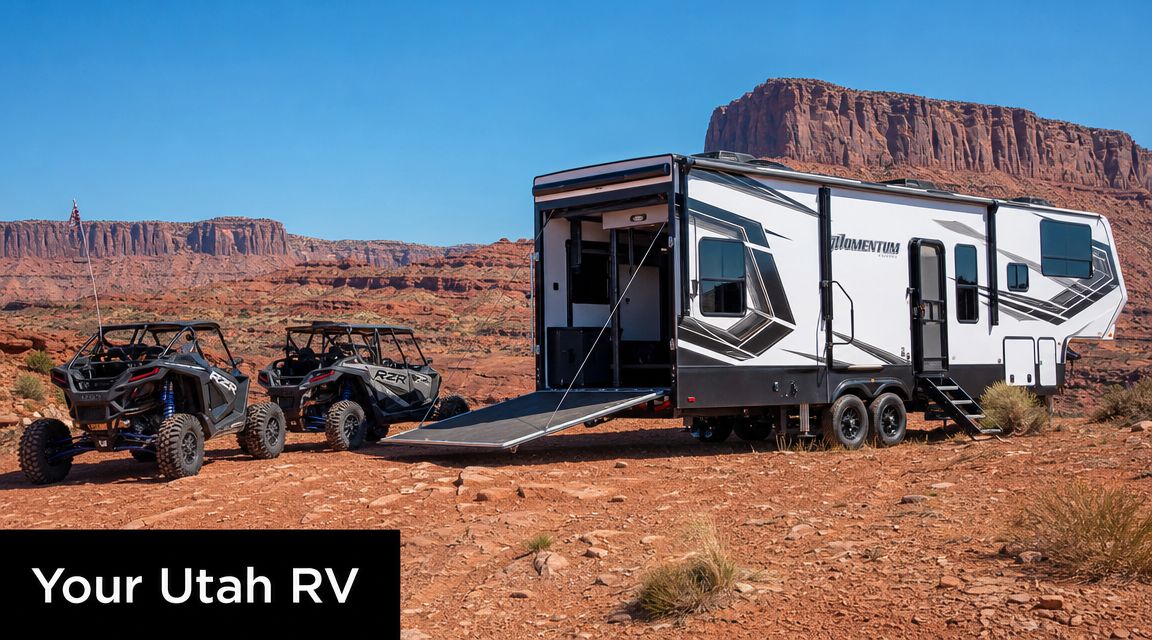
The Moab enthusiast
If your trip starts with loading two machines, spare fuel, riding gear, tools, and coolers, a toy hauler is usually the natural answer. The garage does the work. After unloading, that rear space becomes part of camp life. For buyers focused on utility and living space in the same shell, a toy hauler with living quarters shows why this category exists.
This buyer should pay close attention to truck match, garage length, and how the interior feels once the toys are out. The cargo mission comes first, but the living setup still has to work after the ride ends.
The Bear Lake family
This buyer usually cares more about bed space, kitchen usability, bathroom access, and easy rainy-day living. A travel trailer bunkhouse often wins because every foot of interior space is working toward comfort. There's less compromise. Packing is simpler, setup is simpler, and the whole trip feels more relaxed.
If the family doesn't own large powersports equipment, a toy hauler often adds complexity without solving a real problem.
The High Uintas gear-heavy camper
Some Utah shoppers sit between categories. They may carry kayaks, bikes, fishing gear, camp tables, dog crates, or a lot of outdoor equipment, but not a full ATV setup. For these shoppers, floorplan details matter. A smaller garage-style layout may work. So might a well-designed travel trailer with smart pass-through storage and a realistic loading plan.
A short decision checklist for Utah buyers
- Start with your cargo list: Write down what must travel with you on most trips, not dream trips.
- Match the truck second: Don't reverse the order unless you're also ready to change vehicles.
- Think about your campsite routine: If you don't want to convert a garage every evening, a travel trailer may fit better.
- Check financing locally: Many buyers compare dealership finance options with local credit union terms.
- Get a trade value early: It sharpens the budget and keeps the decision realistic.
- Choose support close to home: Service access matters when winterization, repairs, and preseason prep come due.
Your Buying Checklist from Motor Sportsland
Start with the decision that affects every other one. Match the RV to your real trips in Utah, not the version of camping that only happens once a year.
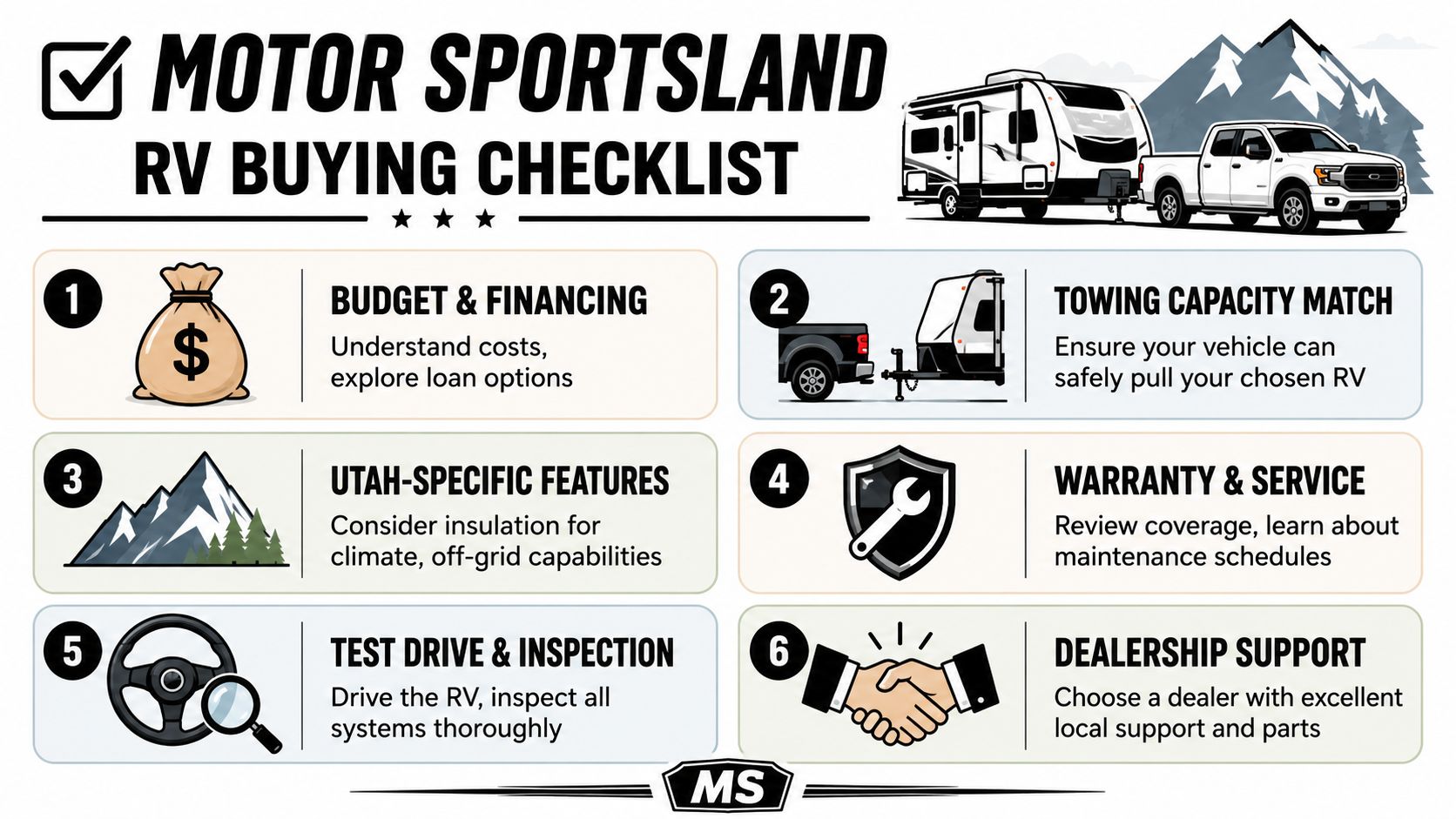
Budget before features
Set a full ownership budget before you start comparing décor, sleeping capacity, or garage space. Include the trailer, hitch equipment, insurance, registration, storage, and any truck changes the purchase may require.
That last part matters in Utah. A trailer that looks fine on paper can become a poor fit once you factor in mountain grades, passengers, fuel, coolers, and the gear that always finds its way into the bed of the truck. Buyers get in trouble when they shop the floorplan first and check the truck second.
Verify the truck and trailer as a pair
Read the truck door-jamb sticker. Check payload, tow rating, hitch requirements, and tire capacity. Then compare those numbers to the trailer's loaded reality, not just its dry weight.
If you plan to trade an older RV or tow vehicle, get those values sorted out early. It keeps the budget honest and makes side-by-side comparisons a lot easier.
Test the floorplan like you already own it
Walk it slowly. Open the refrigerator with the slide in. Stand in the bathroom with the door closed. Check whether kids can reach their beds without climbing over bags, and whether riding gear, wet jackets, groceries, and charging cords have a place to live.
I always tell shoppers to picture the end of a long day in the Wasatch or down in Moab. You are tired, the weather may have turned, and setup happens in the dark. Smart storage and easy traffic flow matter a lot more in that moment than a flashy feature on the spec sheet.
Motor Sportsland helps Utah buyers compare inventory, trade-in options, financing, and service support as part of the purchase process. That matters because buying the trailer is only one step. Keeping it ready for the next season is the rest of the job.
Buy for the way you camp when you're tired, wet, and unloading after dark. That's when a smart layout proves itself.
Take the delivery inspection seriously
Plan enough time at pickup to test the systems you will rely on. Run the awning, slides, water pump, furnace, air conditioner, appliances, locks, power connections, and any garage tie-downs or ramp hardware.
Ask service staff about winterization, battery care, tire pressure, seal inspection, and storage prep for cold Utah months. Those questions save frustration later, especially for first-time owners.
A practical final checklist looks like this:
- Confirm truck, hitch, and trailer compatibility
- Review your loaded camping or cargo setup
- Test every major system at delivery
- Ask how service, parts, and seasonal maintenance work
- Plan a short first trip close to home before the big one
Conclusion Your Next Adventure Starts Here
The toy hauler vs travel trailer decision usually comes down to one core trade-off. Toy haulers maximize cargo flexibility. Travel trailers maximize living comfort. Neither one is automatically better. The right one fits your trips, your truck, and your budget.
For Utah buyers, that choice gets more serious because mountain towing, payload limits, and seasonal storage all show up quickly in real ownership. A great floorplan on paper still has to work on the road to Moab, Bear Lake, or the Uintas.
We've helped Utah shoppers sort through that decision for more than 55 years, and the buyers who do best are the ones who match the RV to their actual weekends. Browse current options online, compare floorplans carefully, and if you want to walk through the differences in person, stop by one of our Salt Lake area locations and see how each style feels before you commit.
Frequently Asked Questions
Is a toy hauler better than a travel trailer for Utah camping?
It depends on what you bring. If you haul motorcycles, ATVs, or side-by-sides, a toy hauler solves a real problem. If your trips focus on family camping and comfort, a travel trailer usually makes better use of the interior space.
Are travel trailers easier to tow in the mountains?
In many cases, yes. The big reason is that travel trailers often preserve broader towability across mainstream pickups and SUVs, while larger toy haulers can demand much heavier truck setups. For Utah grades and descents, the full truck-and-trailer match matters more than appearance.
Do toy haulers have less living space?
Usually, yes in practical terms. Part of the unit is dedicated to a garage, so a similarly sized travel trailer often feels more residential inside. The toy hauler gives that up in exchange for cargo flexibility and a multi-use rear room.
Are toy haulers only for off-road riders?
No. They're most obvious for powersports owners, but some buyers use the garage for work gear, bikes, pet space, or a flexible extra room. The key question is whether you'll use that space often enough to justify it.
Which holds value better?
Both can hold value well when they're maintained properly. Travel trailers generally appeal to a wider audience, while toy haulers have strong appeal with buyers who specifically want garage capability.
What should I check first before buying either one?
Start with the tow vehicle and payload numbers, then compare them to the RV's real loading plan. That step prevents a lot of expensive mistakes.
If you're ready to compare floorplans in person, browse current inventory, or talk through your truck, cargo, and camping style with a local team, visit Motor Sportsland. We can help you narrow down the right travel trailer or toy hauler for the way you camp in Utah.
