
RV Slide Out Troubleshooting: A Complete 2026 Guide for Utah RVers
It’s a moment every RVer dreads. You’ve just pulled into that perfect spot at Jordanelle State Park, ready to kick back and enjoy the mountain view, but when you press the button for your slide-out… nothing. Or worse, you hear a gut-wrenching groan and the room stops halfway out, crooked.
Before your mind jumps to a thousand-dollar repair bill that could cut your trip short, take a deep breath. As the service team here at Motor Sportsland in Salt Lake City, we can tell you that most RV slide out troubleshooting comes down to surprisingly simple fixes. In fact, a huge percentage of the "broken" slides we see just need a little more power or a quick reset. This guide will walk you through the exact steps our technicians use to diagnose problems, saving you time, money, and a whole lot of frustration.
What to Do When Your RV Slide-Out Is Stuck
Dealing with a stuck slide can quickly derail your plans, turning a relaxing getaway into a mechanical headache. But don't reach for the phone to call a mobile tech just yet. We’re going to walk you through the exact diagnostic process our Salt Lake City team uses every day, starting with the most common (and easiest to fix) issues first.
Think of it like being an RV detective. Your first job is to gather clues, and that starts with the basics.
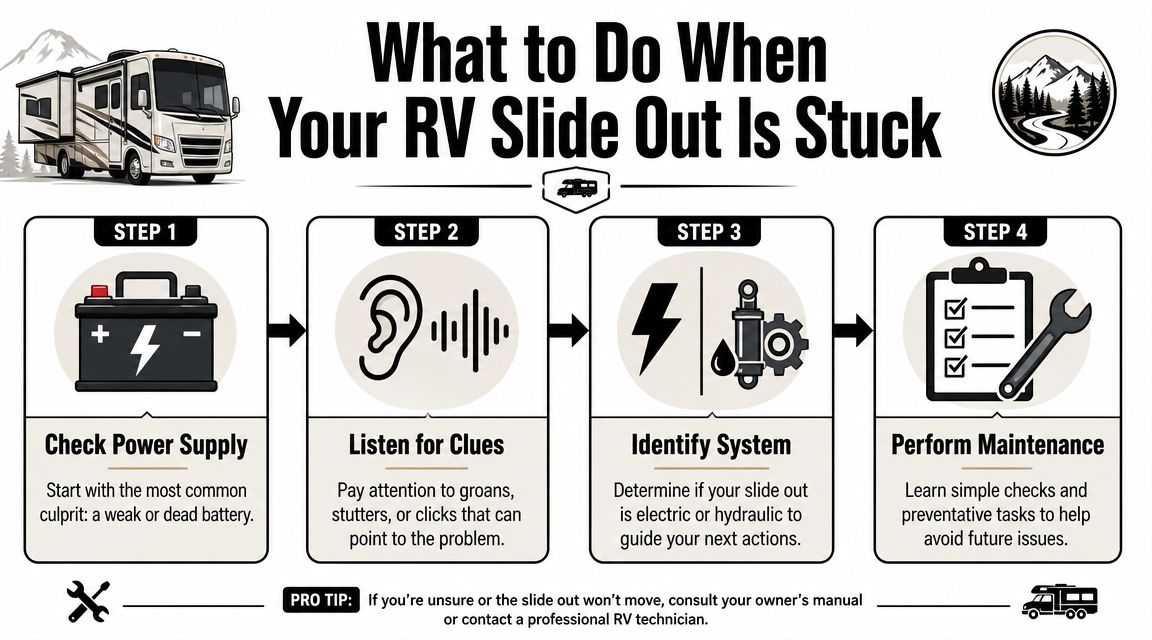
- Check Your Power Source: Is your RV getting enough juice? Low battery voltage is the number one cause of slide-out failure we see at our dealership.
- Listen to the System: The sounds your slide-out makes—or doesn't make—are huge clues. Clicks, whirring, grinding, or complete silence all point to different problems.
- Know Your System Type: Do you have an electric or a hydraulic system? They operate differently and fail in different ways, so figuring out which one you have is crucial for troubleshooting.
This quick overview outlines the same systematic approach our technicians take to get you back to your vacation fast.
By working through the possibilities logically, you can often pinpoint the issue yourself. For those with hydraulic slides, a common point of failure can be the valves that control the fluid. If you suspect that’s your issue, this technical guide on solving common hydraulic valve failures is a fantastic resource for a deeper look.
Diagnosing Your RV Power System First
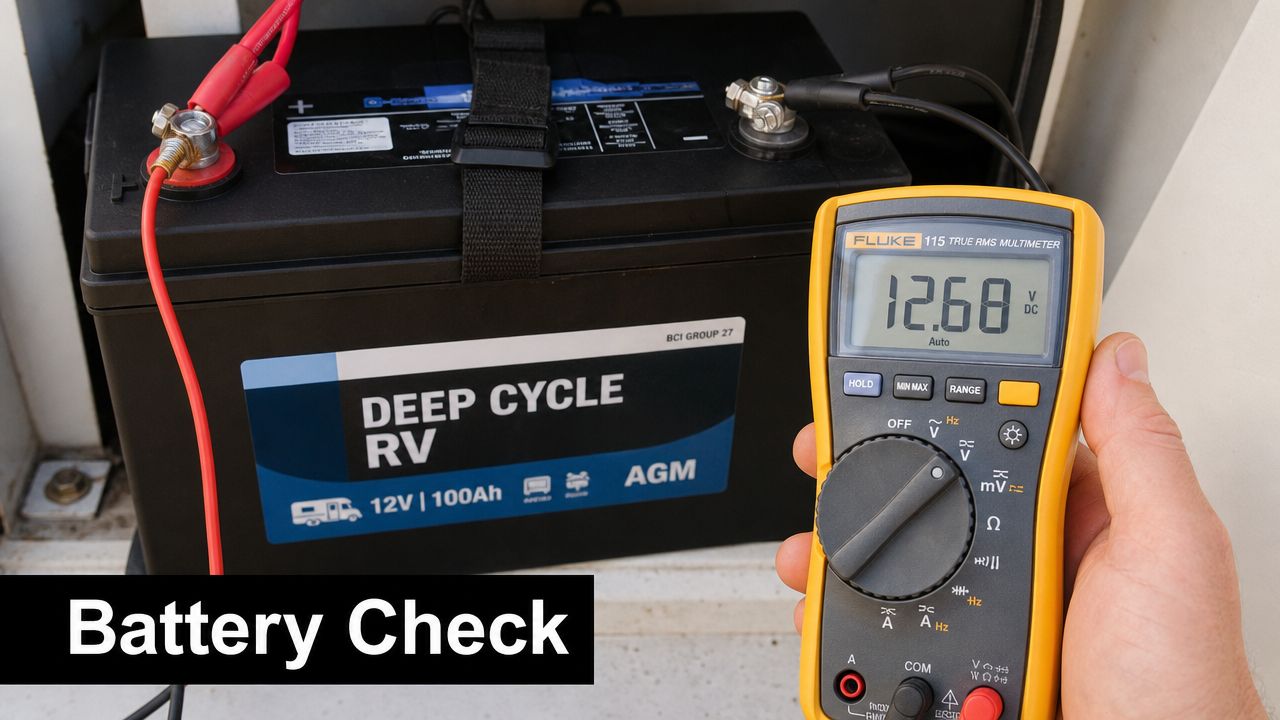
Before you convince yourself you're dealing with a stripped gear or a fried motor, let's talk about the number one culprit our service team sees every single day: power. A slide-out motor is an absolute beast, needing a huge surge of amperage to push thousands of pounds of wall. If your RV’s battery is even a little weak, it just won’t have the punch to get the job done.
This is especially true if your rig has been in winter storage or if you've been enjoying some off-grid camping near the Wasatch Mountains. Your lights might flick on just fine, but that’s a tiny electrical load compared to what a slide-out demands.
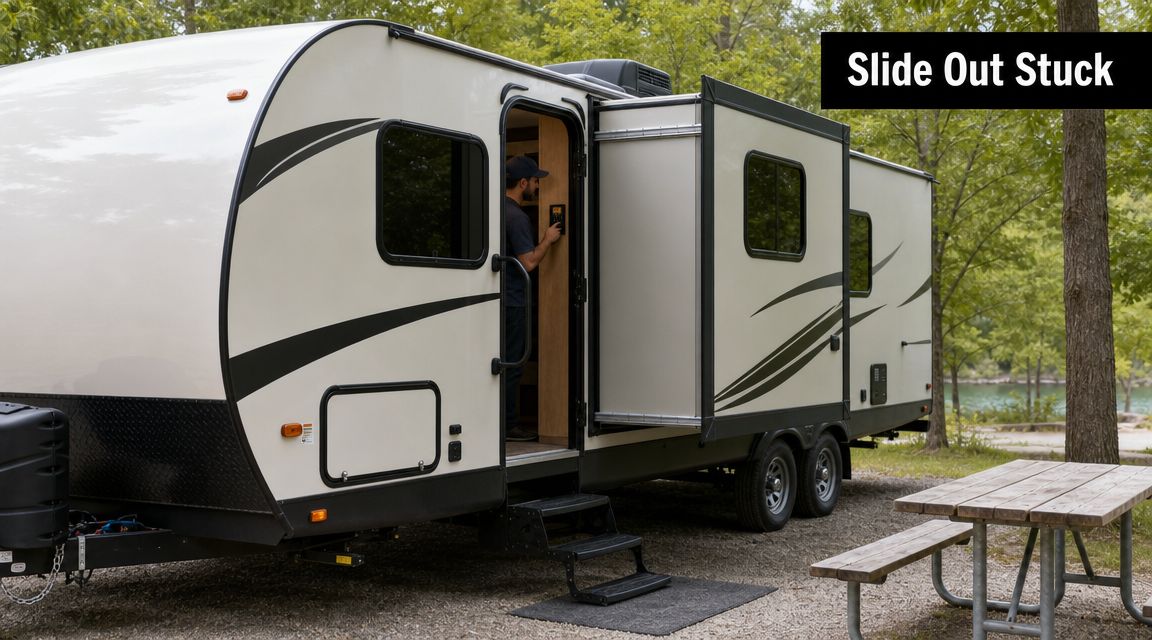
Step 1: Check Your Power Sources
The first and easiest thing to do is give your RV a serious power boost. Don't touch anything else until you’ve tried this.
- Connect to Shore Power: The best-case scenario is plugging into a 30-amp or 50-amp pedestal. This gives your converter a steady stream of power, which in turn delivers all the voltage your slide motors could ever need.
- Run Your Engine or Generator: If you're boondocking, fire up your motorhome's engine. The alternator will start charging the house batteries and provide that extra oomph. For fifth wheels and travel trailers, your onboard generator will do the same trick.
More often than not, this is the magic fix. Let the system charge for a few minutes before you hit that slide-out switch again.
Step 2: Inspect Fuses and Breakers
If giving the system more juice didn't work, the next logical stop is the electrical protection. Slide-out motors pull so much current that they're almost always on their own dedicated, high-amperage fuse or circuit breaker.
Start by looking for a big 30-amp or 40-amp fuse or breaker, usually located near your battery bank or mounted to the RV's frame. After that, check the main 12-volt fuse panel inside your coach for anything labeled "Slide" or "Room." You can often spot a blown fuse just by looking, but a cheap multimeter is the only way to know for sure. If you're new to this, our guide to understanding your RV's electrical system repair is a great place to start.
Pro Tip: A classic sign of low voltage is a slide that moves a few inches and then quits. That isn't a broken part—it's the motor's thermal overload protector doing its job, shutting things down to prevent damage from an insufficient power supply.
When it comes to RV slide out troubleshooting, it's almost always a power problem before it's a mechanical one. Ask any tech, and they'll tell you low battery voltage is the cause "more often than not." Always try running the slide on shore power before you assume the worst. For a deeper dive into this, you can explore detailed diagnostics on RVhelp.com. Getting a handle on these simple power checks will save you a ton of frustration—and money—down the road.
Interpreting Mechanical Clues and Noises
Alright, if you've confirmed the power system is healthy, it's time to play detective with your ears and eyes. The sounds and movements your slide makes—or doesn't make—are your best clues for figuring out what's wrong. You just have to learn how to interpret them.
When you hit that switch, listen closely. If all you hear is a rapid, distinct clicking sound coming from near the motor, that's a classic sign of a bad relay or solenoid. It’s the sound of the component trying to engage but ultimately failing to deliver the juice to the motor. On the other hand, if you hear the motor whirring away happily but the room isn't budging, power isn't the problem. Your focus should shift to the gearbox; you're likely dealing with a sheared pin or stripped gears.
Listening for Gear and Track Problems
Loud, angry noises are the slide-out’s way of screaming for help. Whatever you do, don't try to power through them. You’ll almost certainly turn a minor fix into a major, wallet-busting repair.
- Loud Grinding or Popping: This is the sound that makes every RVer’s blood run cold, and for good reason. It almost always means gear teeth are broken and skipping, or the track is so far out of alignment that it’s binding catastrophically. Stop immediately.
- Squealing or Squeaking: This is more of a cry for attention than a scream of pain. It often just means the tracks or rollers are thirsty for some lubrication. It could also be the rubber seals around the slide, which can get dry and stick to the wall, creating a high-pitched protest.
A Tip from Our Shop: Nine times out of ten, the thing jamming up a slide isn't some catastrophic failure. It's a small rock that got wedged in the track at the last gravel campsite, a throw rug that got bunched up inside, or a shoe someone left in the slide's path. Always check for the simple stuff first.
Performing a Thorough Visual Inspection
A quick walk-around, both inside and out, can save you a world of trouble.
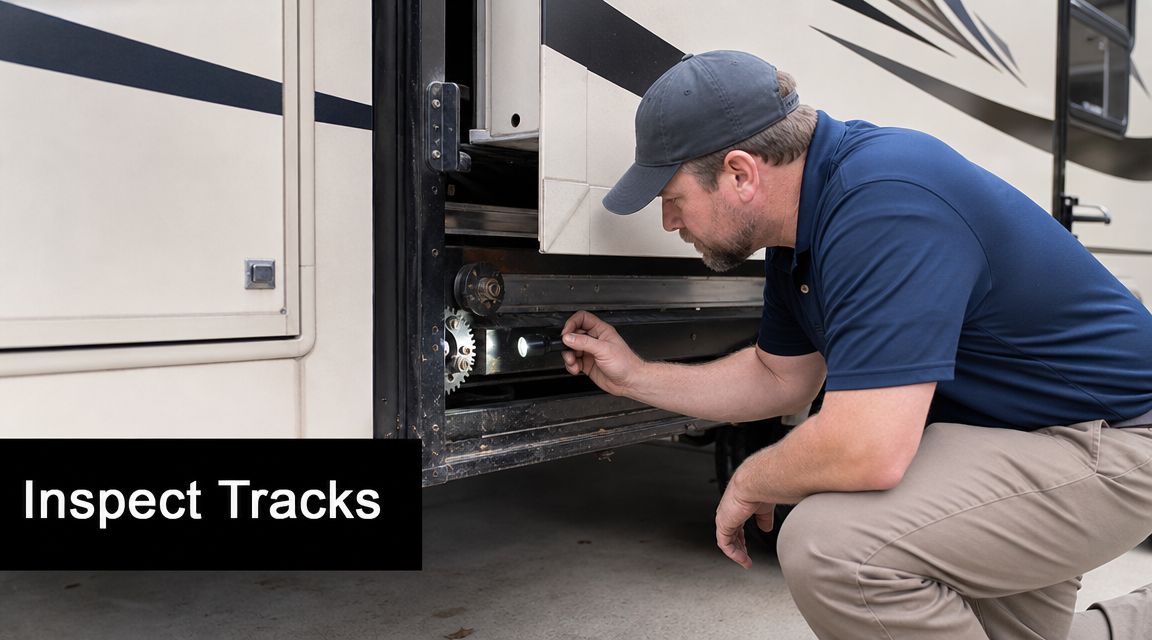
Get down on your hands and knees and inspect the entire path of the slide. On the outside, look for any obvious obstructions—low-hanging branches, a misplaced lawn chair, you name it. Take a close look at the visible gear tracks. You're searching for shiny, freshly worn spots, metal shavings, or, even worse, broken teeth.
Then, check the rubber seals. Run your hand along the full perimeter. If they feel sticky or look cracked and brittle, they could be creating enough friction to stop the slide from moving. A good cleaning and a coat of seal conditioner is often all it takes to solve that problem.
Identifying Your Slide-Out System for Smarter Fixes
Before you can fix a stubborn RV slide-out, you've got to know what you're dealing with. Trying to troubleshoot without first identifying the system is like trying to navigate without a map. The steps for fixing one type are often completely different—and sometimes harmful—for another.
Taking just a minute to figure out what kind of slide you have will save you a ton of time and frustration. Plus, if you end up needing to call our service center, you'll be able to tell us exactly what we're working with. The two systems you’ll almost always find in popular RVs from brands like Keystone, Jayco, and Forest River are electric and hydraulic.
Electric Slide Systems
You'll see electric systems everywhere, especially on travel trailers and smaller fifth wheels. They're reliable and relatively simple, but they come in a couple of different flavors.
- Through-Frame: These are true workhorses. A single motor, usually mounted to the frame underneath your rig, drives a set of long actuator arms that push the room in and out. The easiest way to spot them is by the large, toothed gear racks you can see under the slide room when it's extended.
- Schwintek (In-Wall): These are unmistakable. Look for the S-shaped aluminum tracks—often called "worm gears"—running up and down both sides of your slide-out wall. A Schwintek system uses two separate motors, one on each side of the room, that have to work in perfect harmony to keep the slide from binding.
Most electric slides are powered by small but powerful motors. Many RV slide-out systems utilize DC permanent magnet motors, and understanding the basic principles of DC permanent magnet motors can be helpful for grasping how they work.
Hydraulic Slide Systems
If you're in a bigger fifth wheel or a Class A motorhome, there's a good chance you have a hydraulic system. These brutes use a central electric pump to push hydraulic fluid through lines to move massive, heavy slide rooms. They’re known for being incredibly strong and smooth.
The dead giveaway is the fluid reservoir. Pop open your front storage compartments and look for a tank filled with reddish automatic transmission fluid (ATF). That's the heart of your hydraulic slide system.
Our Team's Advice: Knowing your system is more than half the battle. An electric Schwintek slide that moves crooked is almost always a motor synchronization issue. A hydraulic slide that groans and refuses to budge? It could just be low on fluid. This knowledge helps you zero in on the real problem right away.
For a deeper dive into how these mechanisms operate, check out our complete guide on https://www.motorsportsland.com/blog/camper-slide-out/.
Proactive Maintenance: The Best Fix is Prevention
When it comes to RV slide-out troubleshooting, the easiest fix is the one you never have to make. Honestly, the best way to keep yourself from frantically searching for a solution on the side of the road is to prevent the problem from ever starting. A little proactive care goes an incredibly long way, especially with a system as complex as a slide-out.
Think of it as seasonal maintenance for your RV's biggest moving part. A simple, consistent routine can be the difference between a smooth setup at Bear Lake and a weekend-ruining jam.
Your Seasonal Maintenance Checklist
We always tell our customers to run through this short checklist at the beginning and end of each camping season. If you're a full-timer, doing this every few months is a smart move.
-
Clean and Inspect: Get in there and wipe down the slide-out tracks and all the gear mechanisms. You'll be surprised how much dirt, leaves, and road grime can build up. While you're cleaning, give the gears a good look. Are there any metal shavings or broken teeth? Catching that early is a huge win.
-
Lubricate the Right Way: This is absolutely critical. You need to use a dry lubricant with PTFE made specifically for RV slide-outs. Hit all the moving metal parts, including the tracks and gears. Whatever you do, don't use greasy alternatives like WD-40 or white lithium grease. They’re dirt magnets and will eventually gum up the whole system, making things worse.
-
Condition the Rubber Seals: Those rubber seals around your slide-out are your main defense against water, but they can also cause a lot of problems if they get dry and sticky. Clean them with simple soap and water, then treat them with a UV-blocking seal conditioner. This keeps them pliable so they don’t grab onto the slide wall and cause binding.
A Pro Tip from the Shop: For rigs with a Schwintek system, there's one simple habit that can prevent the most common headache—the motors getting out of sync. After your slide is all the way out or all the way in, just hold the switch for an extra 3 to 5 seconds. This gives the controller a moment to re-register its zero point. Lippert, the manufacturer, says this is the single best thing you can do to avoid sync problems. You can find more tips on fixing common slide-out issues on bfsfleetservice.com.
When to Call Our Service Team for Expert Help
While we're big believers in DIY fixes for many common slide-out problems, it’s just as important to know when to put down the tools. Honestly, recognizing your own limits can be the difference between a minor fix and a trip-ending catastrophe that costs a fortune to repair.
Sometimes, pushing forward with a repair you're not equipped for can cause far more damage. There are some very clear signs that tell you it's time to stop and let a certified technician take over.
Signs It's Time to Schedule Service
If you run into any of these issues, please don't try to force the slide to move. Continuing to run the motor will almost certainly make a bad situation much, much worse. This is your cue to bring your RV into our Salt Lake City service center.
Red Flags for Immediate Professional Attention:
- A Visibly Crooked Slide: If you see one side of the slide moving while the other is stuck, stop everything. You’re looking at a major motor timing issue or a serious mechanical failure. Forcing it is a recipe for a bent frame or broken track.
- Loud, Persistent Grinding: A little squeak often just needs some lubricant. But if you hear a continuous, harsh grinding or popping sound, that’s the sound of money leaving your wallet. It almost always means stripped gears or a damaged track.
- Any Sign of Hydraulic Fluid: For those with hydraulic slides, a puddle of reddish fluid is a major red flag. This is a sealed system, so any leak—no matter how small—means a line or fitting has failed and needs professional attention.
- Electrical Issues Beyond a Fuse: If you pop in a new fuse and it blows immediately, you've got a short circuit somewhere in the wiring. Finding that short requires specialized diagnostic tools and a lot of patience; it’s a job best left to the pros.
Our service team has seen it all. We had a customer come in once who tried to "help" a crooked slide along with a pry bar. He ended up shearing the teeth right off the gear, turning a simple motor resync into a full track and gear replacement. Knowing when to stop is a skill.
Our technicians have the specialized lifts to support a slide room, the diagnostic computers to talk to the control boards, and the experience to realign an entire system safely. If you’re facing one of these serious issues, contact our Motor Sportsland service team to get it fixed right the first time.
And if you're worried about what that kind of repair might set you back, we put together a guide covering what you can expect for RV slide out repair costs to give you a better idea.
FAQ: Your RV Slide Out Troubleshooting Questions Answered
When it comes to RV slide-out troubleshooting, we've heard just about every question imaginable. To save you some time and stress, our team has put together fast, practical answers to the most common issues we see at our Salt Lake City dealership.
Common Slide Out Questions and Answers
Here’s a look at the questions that come up time and time again.
-
Why does my RV slide-out only move a few inches then stop?
This is a classic, and it almost always points to low battery voltage. Those slide motors need a massive amount of power to get going. If the voltage dips while the slide is moving, a built-in safety feature—a thermal overload—will trip to prevent motor damage.Before you assume the worst, try the simple fix: connect your rig to shore power or start your motorhome's engine. Let it run for a few minutes to build up a charge, and then try the slide again.
-
Can I manually retract my RV slide-out in an emergency?
Absolutely. Nearly every slide-out system is built with a manual override for exactly this situation. The process depends on whether your system is electric or hydraulic, so your owner's manual is your best friend here. It usually involves using a specific crank handle or a socket wrench on the motor itself.
Our Team's Advice: Think of the manual override as a "get-you-home" solution, not a long-term fix. It’s for getting packed up and back to a place like our service center. Forcing it can cause more expensive damage if you're not sure what you're doing.
-
What is the best lubricant for my slide-out tracks?
It is essential to use a lubricant specifically designed for RV slide-outs. Look for a dry lube with PTFE. This type of formula won't attract the dirt, sand, and road grime that will absolutely gum up the works.Whatever you do, don't grab that can of WD-40 or white lithium grease for this job. Greasy lubricants are magnets for debris and will cause more problems than they solve.
-
How often should I get my slide-out professionally serviced?
We strongly recommend a professional inspection of your slide-out mechanisms at least once a year as part of your routine RV maintenance. A technician can spot-check the alignment, look for wear on the motors and gears, and make sure your seals are still protecting you from the elements. A quick annual check-up is the best way to prevent a catastrophic failure and water damage down the road.
At Motor Sportsland, we're committed to keeping you on the road and enjoying all the amazing adventures Utah has to offer. If your slide-out problems go beyond these quick fixes, don't hesitate to reach out. Our friendly team is always here to help. Stop by our Salt Lake City showroom to chat, Browse our current inventory online, or schedule a service appointment today.
