
Motorhomes for Sale Utah: Top Local Listings 2026
You're standing in the showroom after a weekend at Jordanelle, looking at a rig that seems perfect until you picture the same coach climbing out of Provo Canyon, sitting through a March freeze, and sleeping a family of five without turning every trip into a puzzle. That's the key motorhomes for sale Utah decision. It's not just “what can I buy,” it's “what will truly fit Utah roads, Utah weather, Utah storage, and the way we travel.”
The buyers who do well here don't start with the flashiest floorplan. They start with use case, then they weigh the hidden costs, the paperwork, and the service reality that comes after delivery. Utah's market is large enough to compare options, but still local enough that what you buy needs to make sense for the Wasatch, the desert, and the mountain campgrounds in between. Utah dealers reported 132 used motor home sales in the first quarter of 2023, out of 1,794 total used heavy truck, trailer, camper, and motor home dealer sales, so motorhomes were about 7.4% of that mix for the quarter, a small but established slice of the market that's worth shopping carefully Utah dealer sales records.
Why Buying a Motorhome in Utah Is a Different Decision
Many Utah buyers start with the wrong question. They ask which coach looks the nicest on the lot, or which one has the lowest payment, when the better question is whether the rig fits winter storage, elevation changes, and the kind of campground access you typically use. I've watched families do the math in real time after a long drive home from a Wasatch campsite, and that's usually when the sticker price stops being the main issue.
The local market is active enough to support serious comparison, but not so broad that you can ignore fit. That's a good thing. It means buyers can still shop like adults, compare condition and floorplan side by side, and avoid the trap of assuming every coach will feel the same once they're loaded with people, gear, and groceries.
What Utah buyers usually miss first
They focus on payment before they think about storage, winterization, roof sealing, and how often they'll use the coach. That's backwards. A motorhome that looks inexpensive today can become the expensive one if it needs tires sooner, sits outdoors all winter, or is awkward to park in a suburban driveway.
Practical rule: buy for the harder trip first. If a rig handles a cold shoulder-season weekend and a mountain grade without drama, the easier trips get simpler too.
Motor Sportsland has two Utah locations, and that matters because the right motorhome is easier to judge in person than in a photo gallery. You can walk through the trade-offs, compare layouts, and see whether a coach feels right for your household instead of guessing from a listing description. For Utah shoppers, that in-person reality check is worth more than any polished brochure.
Class A vs Class B vs Class C in Utah Driving Conditions
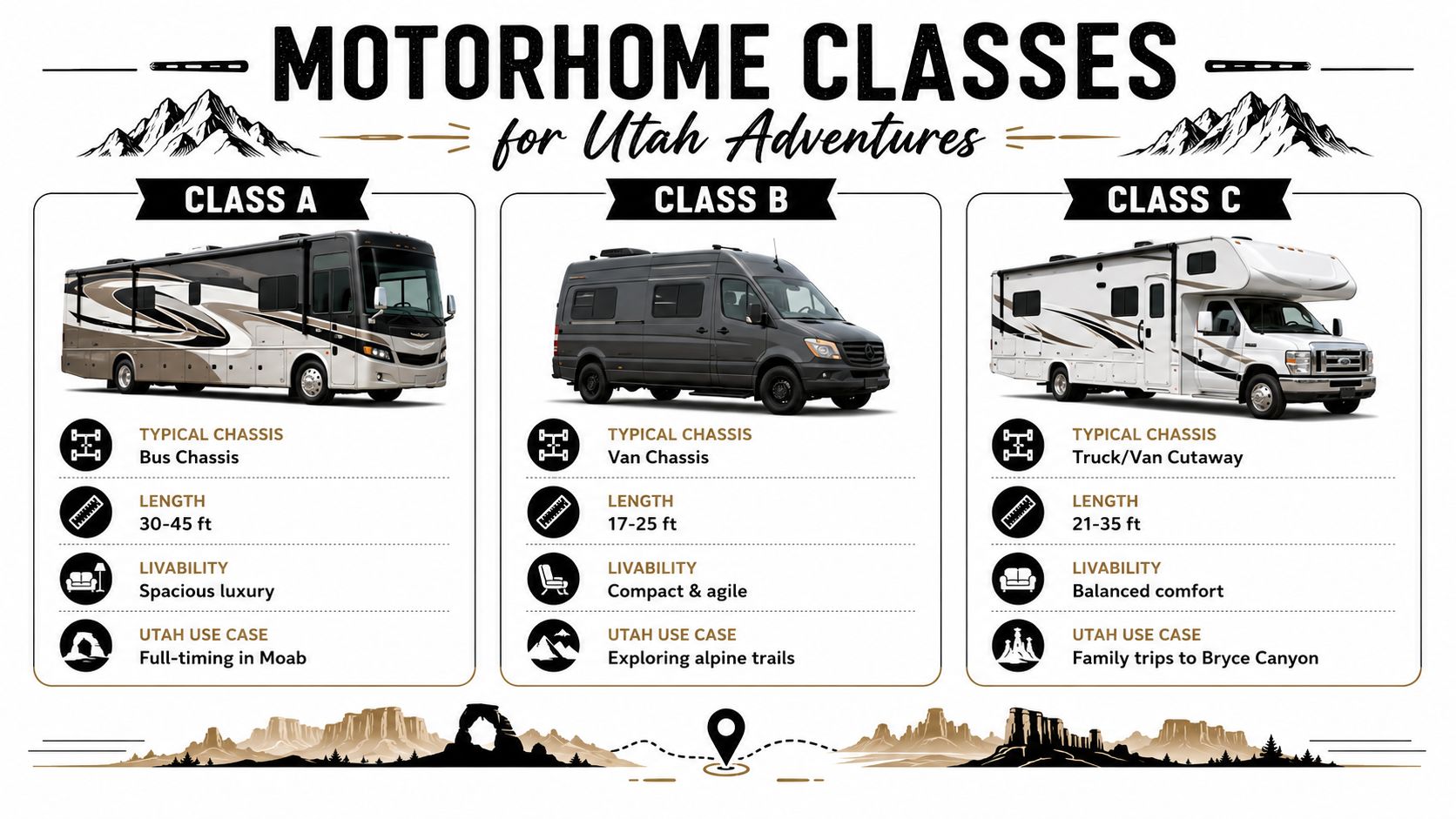
Class choice matters more in Utah than most shoppers want to admit. Our roads ask different things of a coach depending on whether you're threading through Salt Lake City traffic, pulling into a tighter mountain campground, or pointing south toward Moab with a full tank and a full fridge. The right class makes travel calmer. The wrong one turns every stop into a negotiation.
Here's the straight version. Class A is the big coach, built for maximum living space and long-range comfort. Class B is the compact van-based option, the easy one to live with if you value agility more than square footage. Class C sits in the middle, and for a lot of Utah families, that middle is exactly where the smart money lands.
Motorhome Class Comparison for Utah Buyers
| Class | Typical Length | Sleeping Capacity | Slideouts | Best Utah Use |
|---|---|---|---|---|
| Class A | About 34 to 40 ft in local examples | Family and couple layouts vary widely | 3 in one Utah example | Long-haul travel, wintering south, full-time or near-full-time use |
| Class B | Smaller van-style footprint | Best for couples or very small households | Usually limited | Trailheads, city parking, quick weekend trips |
| Class C | About 20 to 32 ft in local examples | 5 to 7 in local examples | 1 to 2 in local examples | Family camping, manageable driving, better balance of space and size |
A Utah Class C often gives the best size-to-utility balance for first-time buyers because it keeps the cab-over sleeping space without the bulk of a bus-style coach. Local inventory examples show a 29 ft Class C with 2 slides, a bunk-over-cab layout, and a rear bath, while another 20 ft model still sleeps 7 local inventory examples. That's practical Utah thinking, not brochure thinking. Shorter length and lower mass usually make maneuvering easier in tight storage areas and mountain-town parking, while the bunk-over-cab design preserves family sleep space.
Class A is for buyers who want the road-trip lifestyle to feel like a small apartment on wheels. Utah examples reach about 40 ft, 27,442 lbs, 3 slides, and 360 hp from a Cummins powertrain, which is the kind of setup that gives you comfort and storage on extended travel, but also demands more from campsite access, axle ratings, and driver confidence Utah Class A examples. Class B is the opposite end of the equation, compact, agile, and easier to park, but not the choice if your family expects living-room space.
Dealer rule of thumb: if the coach feels “big enough” on the lot, spend one more minute thinking about fuel, storage, and campsite access. That second thought saves a lot of regret.
New vs Used Motorhomes in the Utah Market
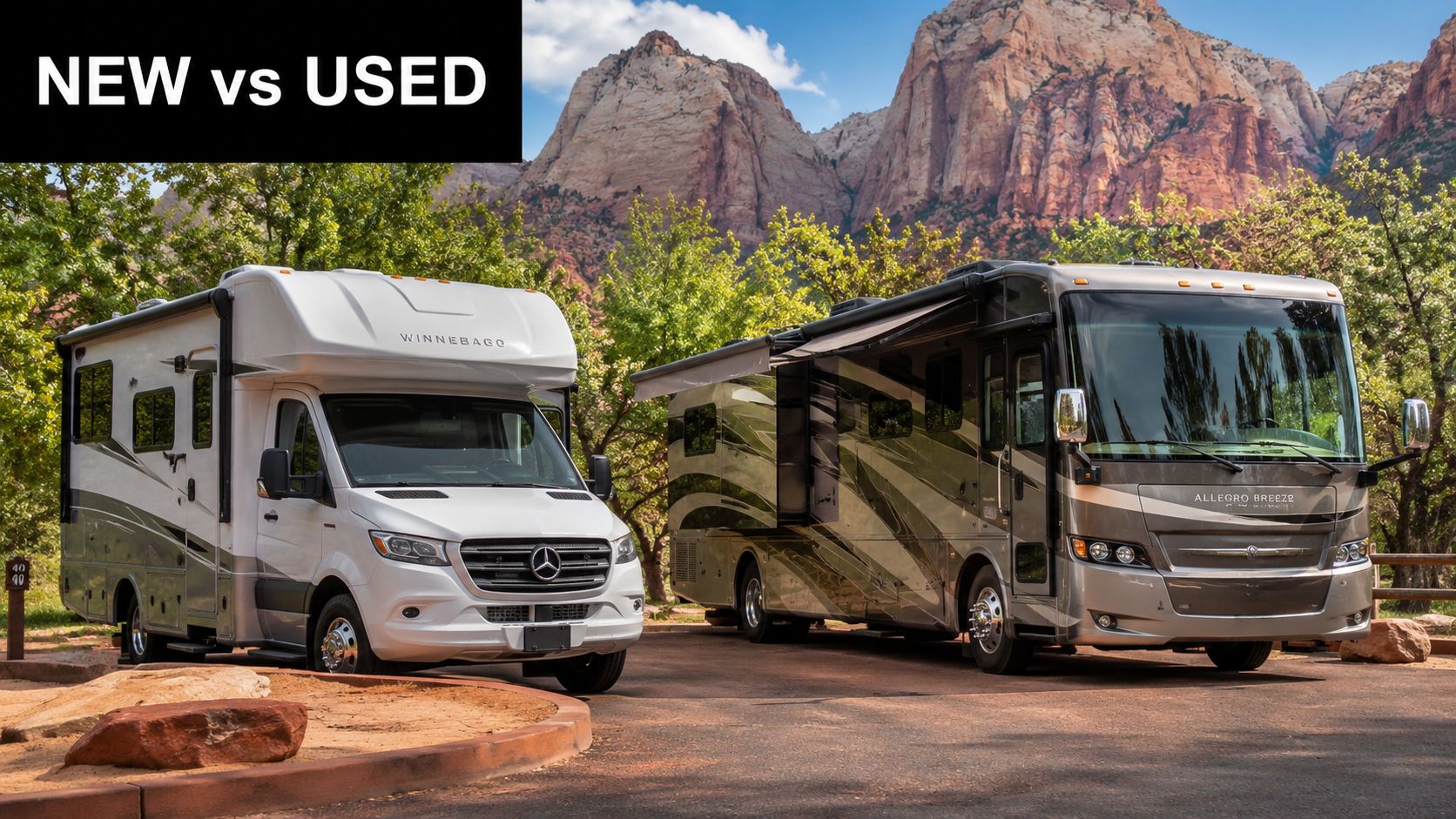
New and used solve different problems. New gives you warranty coverage, current safety features, and a modern floorplan that hasn't been lived in by somebody else. Used gives you more coach for the money if you're willing to inspect carefully and accept some wear. In Utah, that difference matters more because mountain use is hard on roofs, appliances, seals, and suspension components.
The broader RV market tells you why Utah stays busy. Industry statistics compiled in 2026 estimate 11.2 million U.S. households own an RV, and ownership has risen by more than 62% over the last 20 years. The same source says the median age of first-time RV buyers was 32 in 2022, so this isn't just a retiree market anymore. Shipment data cited there shows 32,243 RV units were shipped in March 2024, up 1.2% from 31,869 in March 2023, and Utah accounted for 5.1% of U.S. RV shipment destinations that month RV ownership statistics. That kind of participation keeps variety, financing, service, and resale activity alive across the Mountain West.
When new wins, and when used wins
New wins if you want a specific floorplan, don't want to inherit maintenance unknowns, or care most about warranty support. Used wins if you want to stretch your budget, step up a class, or get more features without paying for the first owner's depreciation. The honest answer is that neither path is always right.
Straight deal math: if the rig already has tired tires, weathered seals, or a sloppy repair history, a low price isn't value. It's a future service bill.
If you're shopping used, use a real inspection mindset and read inspection and negotiation tips the same way you'd approach any pre-owned vehicle, because the habit is transferable even when the product is different. For Utah buyers, the right used coach is usually the one with clean history, decent wear, and a layout you'd still like after the novelty wears off. For new buyers, the payoff is peace of mind and less guessing. Both can be right, but only if the condition matches the price.
I'd also point buyers to our used RV values resource when they're trying to separate fair pricing from wishful thinking. That matters more than chasing a shiny listing.
How to Search and Filter Motorhome Inventory Like a Dealer
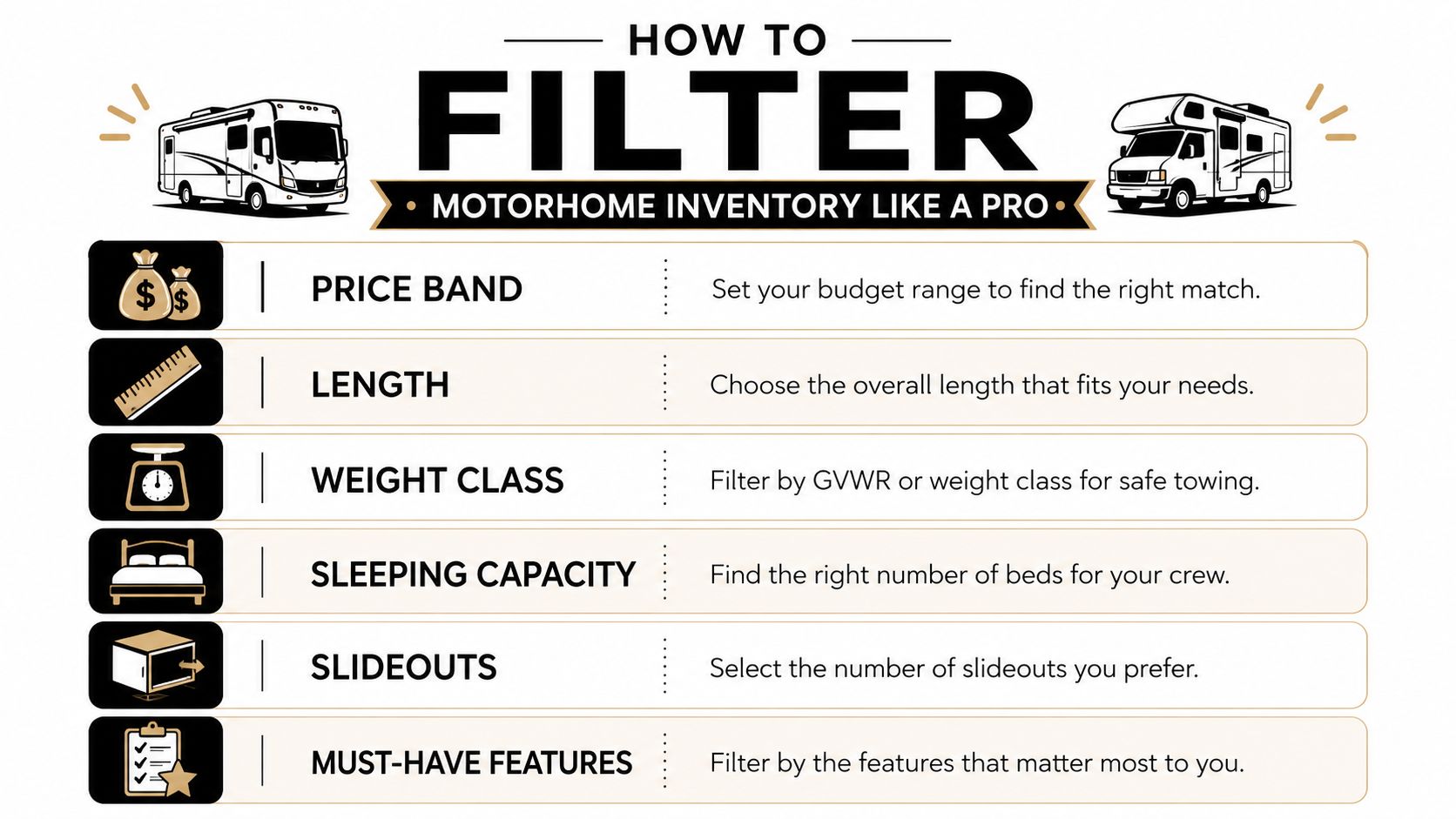
Most shoppers browse inventory backwards. They start with photos, then fall in love with a color scheme, then discover the coach doesn't fit their garage, their campground habits, or their budget. Dealer buyers do it the other way around. We narrow by use first, then by size, then by features.
Start with price band so you don't waste time on rigs that are obviously out of range. Then filter by length, because Utah parking, storage, and campground fit get ugly fast once you go bigger than you planned. After that, check sleeping capacity, slideouts, and the features that really affect your trips, like bunkhouse sleeping, an outdoor kitchen, a generator, or solar.
The filter order that actually works
- Price Band. Get real about the payment and the ownership budget at the same time.
- Length. Make sure the rig fits your driveway, storage spot, and favorite campgrounds.
- Weight Class. Confirm the coach matches how you'll drive and where you'll take it.
- Sleeping Capacity. Count real sleepers, not “occasional” sleepers.
- Slideouts. More room is great, but more moving parts need more attention.
- Must-Have Features. Bunkhouse, generator, solar, outdoor kitchen, or rear bath, choose what you will use.
That process beats shopping by appearance every time. A rig that looks plain can be a better Utah fit than a flashy one with a bad floorplan. If you want a practical place to start, browse our Salt Lake City dealer overview and then build a shortlist on your phone before you ever visit the lot.
Copy this checklist before you browse
- Budget range
- Max length
- Required sleeping spots
- Number of slideouts
- Storage location
- Winter use or summer use
- One must-have feature you refuse to give up
Use that list when you're browsing inventory on motorsportsland.com. If the coach misses two or more items, keep looking.
Financing Trade-Ins and the Real Cost of Ownership
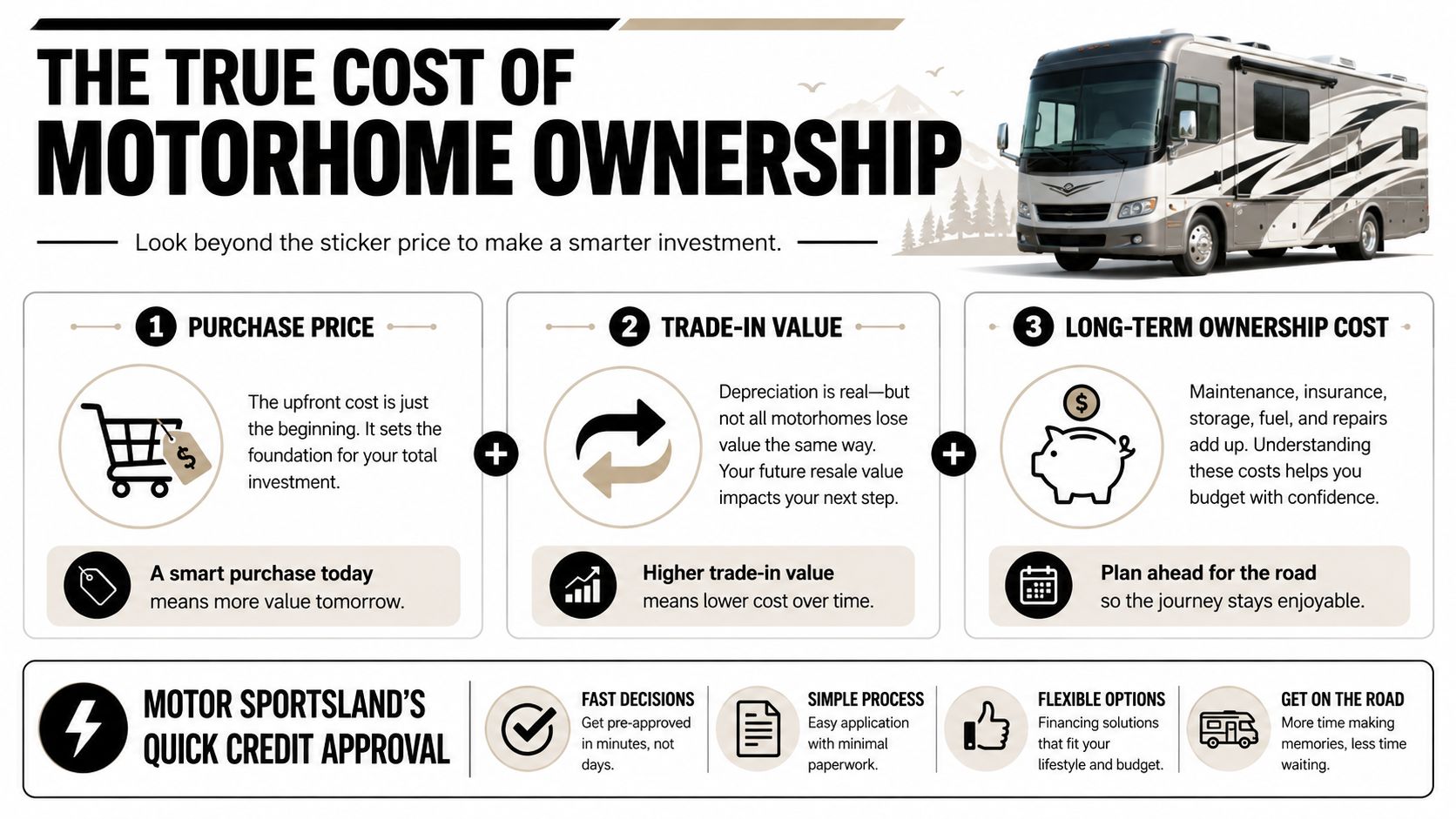
The cheapest motorhome on the lot can be the most expensive one to own. That's not a slogan, it's what happens when buyers look only at the sticker and ignore the rest of the ownership picture. In Utah, that means you've got to think about financing, trade-in value, storage, maintenance, and the way mountain travel wears on a coach over time.
At a dealership level, the smart move is to connect those decisions instead of treating them separately. A quick credit application or pre-qualification tool helps you understand your payment range before you get attached to a unit. A trade-in appraisal helps you see how much equity you're really bringing to the deal. Then the service side tells you what the coach will need to stay road-ready after the sale.
The costs buyers forget to price in
Used or new, motorhomes need attention. Tires age out, batteries weaken, roofs need sealing, and winterization isn't optional in Utah. Insurance and storage also matter, especially if you're buying a larger coach that won't live in a driveway year-round.
Motor Sportsland's financing resources are built for that reality, and the RV financing options guide is worth reading before you make a decision. That's where buyers stop thinking only about monthly payment and start thinking about the whole deal. If the budget only works when every other cost disappears, it's not a real budget.
A dealership can also help you compare trade-in numbers against actual market condition. That's why a clean appraisal and a realistic service estimate matter more than squeezing one extra month of payment comfort out of a risky purchase.
Ownership truth: if you can't afford the first year of upkeep, you can't afford the coach.
Pre-Purchase Inspection and Service Needs for Utah Roads
A pre-purchase inspection in Utah isn't busywork. It's the difference between a coach that starts the season ready and one that starts the season in a service bay. Roof condition, seal integrity, tire age, battery health, brake components, plumbing, electrical systems, slideout operation, and signs of collision repair all deserve a hard look before money changes hands.
Our service team looks for wear that a casual walk-through misses. Soft spots around the roof line, uneven tire wear, weak batteries, or plumbing issues after a Utah winter can point to bigger problems under the surface. If a seller shrugs off those items, that's your cue to slow down.
What I'd check before buying any used coach
- Roof and seal condition. Water intrusion is the bill nobody wants later.
- Tires. Age and wear matter more than the shine on the sidewall.
- Batteries. A weak house battery turns a weekend trip into a headache fast.
- Brakes. Mountain travel demands more from stopping power than flatland driving.
- Plumbing. Freeze damage can hide until the first real use.
- Electrical systems. You want every switch and outlet to behave normally.
- Slideouts. Listen, watch, and check alignment while they move.
- Collision repair clues. Uneven panel fit or mismatched finishes deserve questions.
A first two years of ownership should also include realistic planning for service intervals, not just fuel and campground fees. If the coach needs immediate tire work, battery replacement, or seal repair, that isn't a small issue. It's part of the purchase decision.
Matching Motorhomes to Utah Buyers Families Retirees and Toy Hauler Owners
Not every buyer should want the same motorhome, and I'd push back hard on anyone who says there's one “smart” answer for everyone. Utah families need something different from retirees, and both need something different from the toy hauler crowd. The mistake is buying the lifestyle you wish you had instead of the one you will use.
Families
Families usually do best in a Class C with bunk-over-cab sleeping, manageable length, and enough slideout room to keep the cabin from feeling cramped. That layout works for weekend runs to Bear Lake, Jordanelle, or Bryce Canyon without forcing you into a giant coach that's a pain to park. For service planning, I'd prioritize the roof, slide seals, and child-proofing the living space.
Retirees
Retirees who travel longer or winter elsewhere should look hard at Class A comfort, especially if the goal is extended road time rather than quick local trips. The bigger coach gives you more residential feel, but it also demands more campsite and storage planning. If you're buying for long-haul travel, don't underbuy on braking margin, tire condition, or service access.
Toy hauler owners
If your weekends include dirt bikes, side-by-sides, or snowmobiles in the Wasatch and Uinta backcountry, a toy hauler is usually the better fit than trying to force toys into a standard motorhome setup. The garage space matters. So does the service plan, because cargo use adds wear that casual camping doesn't.
The cheapest rig is only “cheap” until you ask whether it fits your actual trips. That's the standard I'd use every time.
Utah Registration Titling and Tax Tips for Motorhome Buyers
Utah paperwork is straightforward when the unit is clearly a motorhome, but buyers still need to slow down and make sure the title path matches the vehicle. If you're buying used, confirm the title is properly assigned, the lien is clear if there is one, and the paperwork matches the coach you're taking home. That avoids the most common delay, which is thinking the rig is ready when the documents aren't.
The place buyers get tripped up is confusing motorhomes with manufactured or mobile homes. Utah DMV rules for used manufactured or mobile homes are different. A used manufactured/mobile home is exempt from sales and use tax, a new manufactured/mobile home is taxed on 55% of the purchase price, and first-time Utah titling may require a VIN inspection using Form TC-661 along with Form TC-656 for title and registration Utah DMV mobile and manufactured home rules. That's a separate rule set from ordinary motorhome shopping, so don't mix them up.
Keep the paperwork simple
- Confirm title assignment early.
- Ask about lien release status.
- Check whether a VIN inspection is needed.
- Verify registration steps before delivery.
- Separate motorhome rules from manufactured-home rules.
If you want help sorting the documents before title day, our team at Motor Sportsland can walk you through it without the runaround. A clean paper trail saves time, and in Utah, time is usually the thing buyers least want to waste.
Motorhomes for Utah travel only make sense when they fit your roads, your storage, and your budget after the sale, not just on the day you pick them up. If you want straight answers, real inventory comparisons, and a service team that understands Utah winters and mountain miles, visit Motor Sportsland and talk with us in person. We'll help you narrow the field, check the ownership costs, and find the coach that actually fits how you camp.
FAQ
What class of motorhome is best for Utah families?
A Class C usually gives families the best balance of sleeping space, drivability, and campground fit.
Is new or used better for Utah motorhome buyers?
New is better if you want warranty support and zero unknowns. Used is better if you want more coach for the money and you're willing to inspect carefully.
What should I inspect first on a used motorhome?
Start with the roof, seals, tires, batteries, brakes, slideouts, and plumbing.
Do Utah motorhome buyers need different paperwork than car buyers?
Yes, motorhomes have their own title and registration process, and manufactured or mobile homes follow separate Utah DMV rules.
What's the biggest mistake Utah buyers make?
They buy by payment or appearance instead of by fit, maintenance reality, and storage needs.
Can I trade in my current RV toward a motorhome?
Yes, and a trade-in appraisal should be part of the ownership calculation before you pick a unit.
