
Instant Hot Water Heater for RV: A Utah Owner's Guide
Nothing ruins an RV shower faster than getting comfortable, shampoo in your hair, and then feeling the water go cold. Most Utah RV owners have lived that moment at least once. It happens at Bear Lake, it happens after a long day in the Wasatch, and it definitely happens when a few people in the trailer all want hot water back-to-back.
That's why so many shoppers now ask about an instant hot water heater for rv setups instead of the old storage-tank style. Demand is climbing fast. “RV tankless water heater” searches on major online retailers are hitting over 2,300 per week as of May 2026, which tells you owners want a different camping experience than they used to accept as normal, according to this RV tankless water heater market report.
The appeal is simple. You stop planning showers around a small tank. You get more usable space. You heat water when you need it instead of keeping a tank hot all day. But tankless isn't magic, and Utah is not an average test environment. Cold inlet water, shoulder-season nights, and high camps in the mountains can expose weak sizing or sloppy installation fast.
Introduction
If you're shopping for an instant hot water heater for rv use, the big question isn't whether tankless works. It does. The better question is whether it will work well in your rig, for your family, and in the places you camp.
A modern RV tankless unit is built around on-demand heating. Instead of storing a fixed amount of hot water and waiting for recovery, it fires when you open the tap and keeps heating as long as water is flowing. That's the difference owners feel right away. Less rationing. Less “who showered first?” conversation. Far fewer complaints from the back bunk.
Utah owners need a little more nuance than generic buying guides usually provide. A trailer that works fine in a lower, warmer campground can behave differently up in the mountains or during a cold spring trip. That's where tankless systems either feel like a major upgrade or a source of frustration.
The best tankless setup is the one that's sized for how you camp, not just what looks good on a spec sheet.
How an Instant RV Water Heater Actually Works
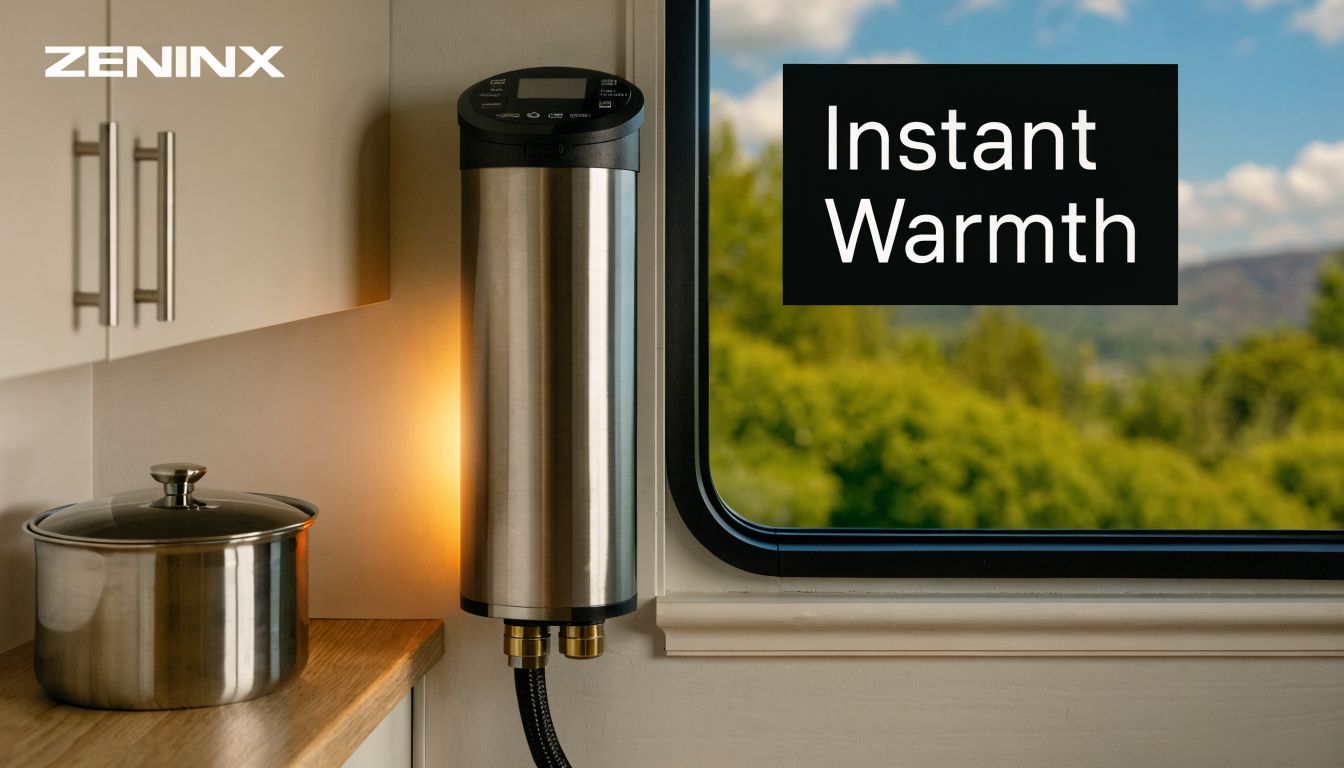
Tankless water heaters sound more mysterious than they are. In practice, think of one as a small propane-fired heating system for moving water. You open a hot tap, the unit senses flow, the burner lights, and water moves through a heat exchanger where it picks up heat before heading to your shower or sink.
The basic sequence
Here's what happens when you turn on hot water:
- A flow sensor detects water movement and tells the heater there's demand.
- The propane burner ignites and starts producing heat.
- Cold water passes through the heat exchanger instead of sitting in a storage tank.
- The control system modulates heat output to target your selected water temperature.
- Hot water exits the unit and continues through the RV plumbing to the fixture.
That's why a tankless heater doesn't “run out” in the same way a small tank does. As long as the burner has fuel, the water is flowing, and conditions stay within the unit's operating range, it keeps making hot water.
What BTU and GPM mean in plain English
Two specs matter more than most owners realize:
- BTU/hr tells you how much heat the unit can generate.
- GPM tells you how much water it can heat at once.
A good real-world example is the Fogatti InstaShower Ultra. It can produce 66,000 BTU/hr and deliver up to 3.9 GPM, enough for a shower and a sink at the same time without the temperature drop older systems often showed, as covered in this Fogatti performance analysis.
For a non-RV explanation of the same basic continuous-flow principle, this Sydney continuous flow water heater guide does a nice job breaking down how on-demand systems heat water without storing it first.
Some owners learn best by seeing the layout and controls in action:
Why propane dominates in RV applications
Most RV tankless units are propane-fired because propane can deliver stronger heating output in a compact package. That matters in a trailer or motorhome where power draw, venting, and available utility space all have to stay practical.
A properly installed propane tankless heater can feel like a major livability upgrade. A poorly matched one feels like a science project. That difference usually comes down to sizing, climate, and installation quality.
Tank vs Tankless Heaters A Head-to-Head Comparison
Most RV owners aren't choosing between “good” and “bad.” They're choosing between two systems with different trade-offs. A tank heater is simpler and familiar. A tankless heater gives you longer-use comfort and often better space efficiency, but it asks more from the install and from the way you use it.
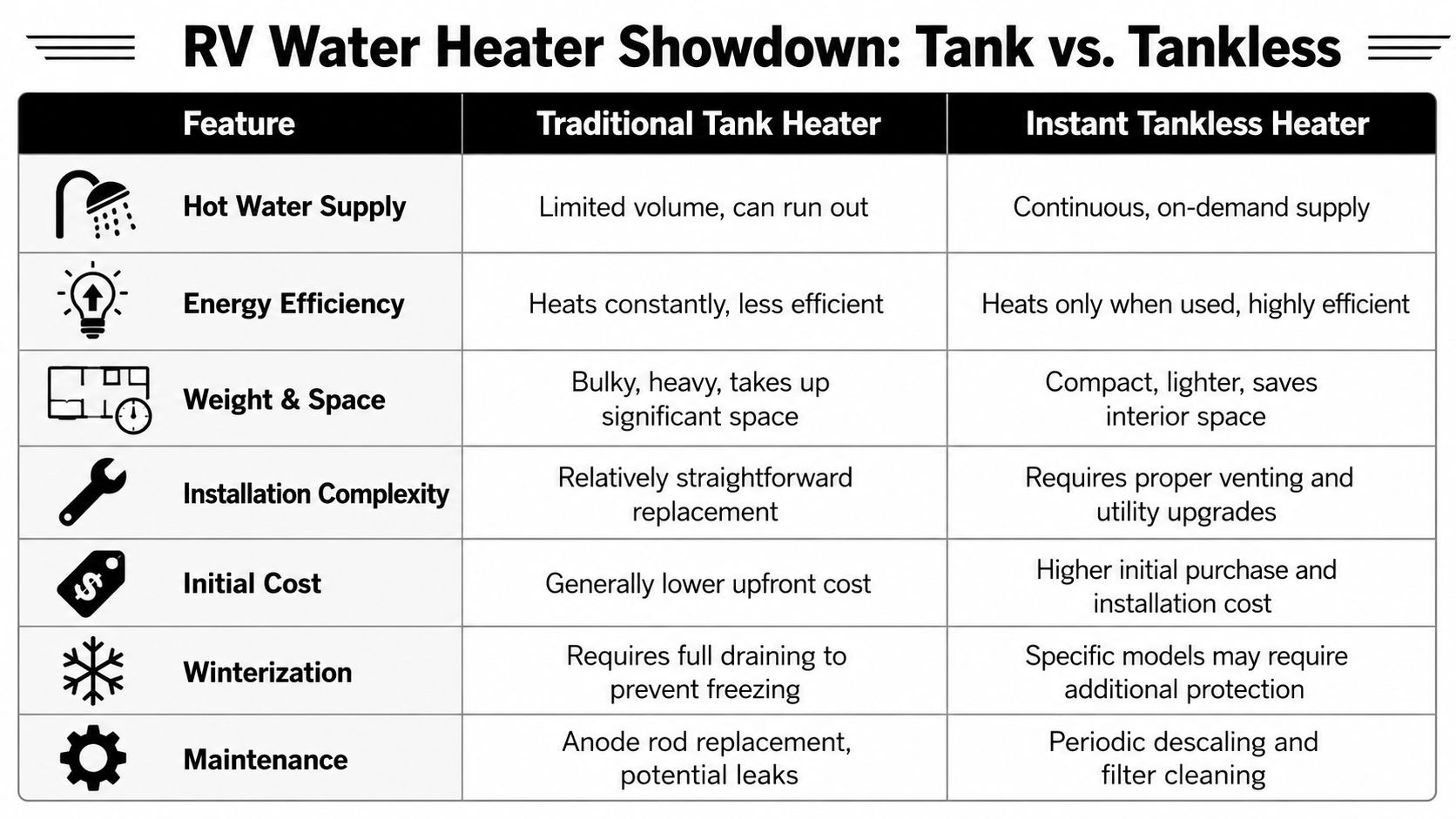
RV Water Heater Showdown Tank vs Tankless
| Feature | Traditional Tank Heater (6-10 Gallon) | Instant (Tankless) Water Heater |
|---|---|---|
| Hot Water Supply | Limited volume, can run out | Continuous, on-demand supply |
| Energy Efficiency | Heats constantly, less efficient | Heats only when used, more efficient |
| Weight and Space | Bulky, takes up more space | Compact, frees up storage area |
| Installation Complexity | More straightforward replacement | Requires correct venting and utility setup |
| Initial Cost | Usually lower upfront | Usually higher upfront |
| Winterization | Needs full draining to prevent freeze damage | Model-specific freeze protection matters |
| Maintenance | Tank-related wear and leak points | Descaling and filter cleaning matter more |
| Lifespan | Shorter typical service life | Can last longer when maintained |
Where tankless clearly wins
Tankless shines when hot water demand comes in waves. Families, bunkhouse owners, and people who like longer showers notice the benefit quickly. It also helps in smaller floorplans because removing the bulk of a storage tank opens space that manufacturers can use elsewhere.
Efficiency is another real advantage. By eliminating standby heat loss, tankless water heaters can be 24% to 34% more energy-efficient in low-use scenarios, according to this Camping World guide to tankless RV water heaters. That lines up well with weekenders, solo travelers, and couples who don't use hot water constantly all day.
Practical rule: If your biggest complaint is “we keep running out of hot water,” tankless usually fixes the right problem.
Where a tank heater still makes sense
Tank systems still work well for owners who want lower upfront cost, easier one-for-one replacement, and a more familiar setup. They can also feel simpler if you camp in mild conditions and don't care about back-to-back showers.
The downside is recovery. Once the tank is depleted, you wait. You also carry the compromises of a fixed-volume system all the time, even when the rest of the RV has become more modern.
If you want a non-RV local plumbing comparison of the same technology trade-offs, this Los Angeles tankless water heater overview is useful for understanding why on-demand systems keep replacing tank-style units in many applications.
The Truth About Instant Hot Water in Your RV
“Instant” is the marketing term. It's not the literal experience.
An instant hot water heater for rv use still has to sense water flow, ignite the burner, warm the heat exchanger, and push previously cooled water out of the lines. That means there's usually a short wait before hot water arrives. What tankless gives you is continuous hot water once it's up and running.
What the delay feels like in real life
Owners usually notice two things:
- An ignition delay before the burner is fully producing heat
- Cool water in the plumbing lines that has to clear before the hot water reaches the fixture
That's normal behavior. It doesn't mean the unit is faulty.
Real-world testing shows you may need to purge 1 to 2 gallons of cool water initially, but after that a tankless unit can sustain a 20+ minute shower at 2.5 GPM, while a standard 6-gallon tank heater is depleted in under 8 minutes, according to Keystone's tankless water heater usage tips.
The mistake that causes temperature complaints
A lot of hot-cold complaints come from the way people use the faucet. With a tankless system, the control panel should do the temperature setting. The faucet should mostly act like an on-off switch for hot water.
If you keep blending in cold water at the faucet, flow through the heater can change enough to make the temperature feel unstable. If you're also chasing low pressure or inconsistent pump performance, fix that first. A weak RV water system will make any tankless heater look worse than it is. This guide on RV water pump troubleshooting helps diagnose the plumbing side before you blame the heater.
Set the temperature at the heater, then use the hot side consistently. That's the habit change that makes tankless feel normal.
Sizing Your Unit for Utah's Mountains and Cold Snaps
Sizing is where a lot of RV owners get tripped up. They shop by brochure headline, not by actual camping conditions. In Utah, that's risky because cold inlet water and high elevation can make a heater perform very differently than it does in milder places.
Start with fixture demand
The first question is simple. How many fixtures might run at the same time?
A shower and a sink together place very different demands on a water heater than a single faucet in a compact camper. If your family often washes dishes while someone showers, or if you've got a bunkhouse layout with more people cycling through, don't size for the lightest possible use.
Think in terms of overlap:
- Single-user camping often tolerates a smaller-capacity unit
- Family travel benefits from more flow headroom
- Toy hauler and larger trailer use usually needs more margin because the expectations are closer to home comfort
Cold water changes the math
A tankless heater doesn't just produce “hot water.” It raises incoming water to your target temperature. When Utah groundwater or tank water starts colder, the heater has to work harder to deliver the same result at the fixture.
That's why some owners say a heater is great in summer and disappointing in late fall. The unit didn't necessarily fail. The operating conditions changed.
If you boondock often, this matters even more because off-grid routines usually involve tighter propane use, more reliance on the onboard water system, and more exposure to cold mornings. This guide to camping off the grid is a good companion read if your RV use includes dry camping in the Mountain West.
Altitude is the Utah-specific issue many guides skip
Here's the part generic articles usually miss. Propane tankless units can lose 3% to 5% combustion efficiency for every 1,000 feet of elevation gain. At a 10,000 ft campsite, that can result in a 30% reduction in heating performance if the unit isn't designed or adjusted for high-altitude operation, according to Aqua-Hot's RV tankless heater information.
That matters a lot in Utah. Many popular camping areas sit well above valley elevation. A unit that feels strong near Salt Lake City can struggle in thinner air if it isn't altitude-friendly.
When shopping or upgrading, ask these questions:
- Is the unit approved for high-altitude use
- Does it require a specific adjustment or kit
- Will the expected camping elevation affect combustion and output
- How cold is the water where you usually camp
If your trips include places like the Uintas or other higher-elevation campgrounds, don't treat altitude as a minor footnote. It's a first-order sizing factor.
Installation and Venting What You Need to Know
A tankless retrofit is not a casual Saturday project unless you're very comfortable with propane, RV electrical systems, and appliance venting. The heater itself may fit the opening, but safe operation depends on what supports it behind the wall.
The three systems that have to work together
A proper install usually comes down to these pieces:
- Propane supply needs to match the heater's demand and remain leak-free.
- 12V power runs ignition and controls, so wiring quality matters.
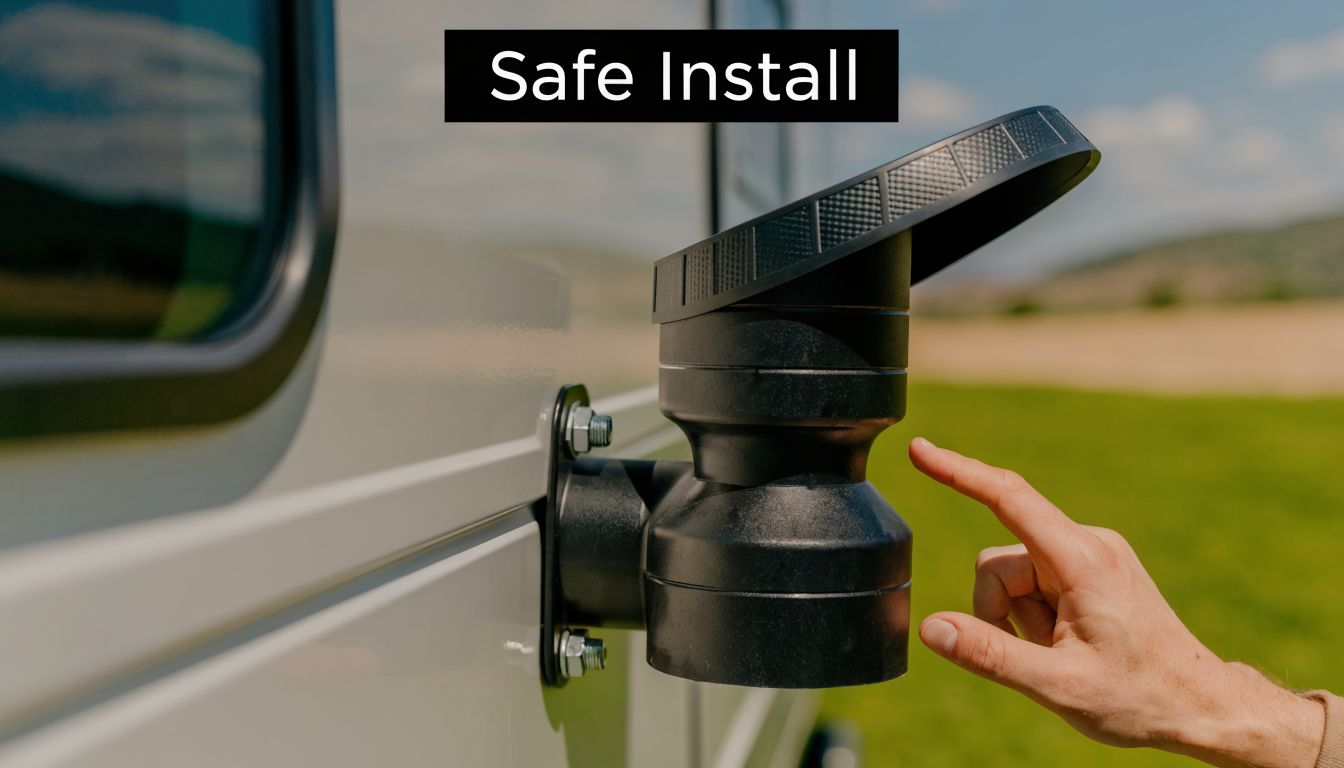
- Exterior venting has to move combustion gases safely outside the RV.
Venting is the part people underestimate. This is not optional. A tankless propane heater produces combustion byproducts that must exit the coach correctly. Bad vent routing, poor sealing, or mismatched components can create both safety and performance problems.
What commonly goes wrong on DIY retrofits
Most bad installs fall into a few categories:
- Incorrect venting parts or placement
- Loose or poorly tested propane connections
- Weak electrical supply to the controls
- Inadequate sealing around the exterior opening
- No consideration for service access later
If your RV already has other electrical quirks, handle those before adding a more sensitive appliance. This article on RV electrical system repair is a useful check on the 12V side of the coach before an upgrade.
A tankless heater can only perform as well as the gas, wiring, and venting around it.
Professional installation isn't just about convenience. It's about protecting the RV, the appliance, and the people inside it.
Simple Maintenance for Endless Hot Water
Tankless heaters don't ask for much, but they do punish neglect. The biggest issue in Utah is mineral buildup. Hard water can leave scale inside the heat exchanger, and once that starts restricting heat transfer, the heater gets less stable and less efficient.
The maintenance habits that matter most
Keep it simple and consistent:
- Descale on schedule if you camp often or use hard water sources regularly.
- Check the inlet screen or filter and clean out debris before it affects flow.
- Inspect the burner area for dust, webs, or contamination if the RV sits for a while.
- Winterize carefully so trapped water doesn't freeze inside the unit.
Descaling is the big one. If hot water delivery starts feeling uneven or performance drifts over time, scale is one of the first things to suspect. Owners who stay ahead of that usually avoid a lot of nuisance complaints.
Don't skip freeze protection
Tankless systems still contain water passages. If those freeze, expensive damage can happen fast. Follow the manufacturer's winterization procedure exactly, especially before storing the RV through a Utah winter.
If you travel often and prefer field help over a shop visit, services like mobile RV service for owners and operators show the kind of on-site support many RVers look for when plumbing or appliance issues pop up away from home.
A maintained tankless heater is usually a very satisfying upgrade. A neglected one turns into a troubleshooting session at the worst possible time.
Let Motor Sportsland Handle Your Upgrade
You get back to camp outside Bryce or up near Logan Canyon, the water is cold, the air is thinner, and that is when a tankless upgrade proves whether it was chosen well or chosen fast.
There are two effective paths. You can purchase an RV that already includes a factory-installed tankless system, or retrofit the RV you already know and like. A factory setup usually provides cleaner fitment and controls that were planned with the coach from the start. A retrofit offers more freedom to choose a unit that matches how you camp in Utah, especially if you deal with shoulder-season cold and higher elevations.
If you are still shopping, it makes sense to focus on brands and floorplans that commonly include tankless water heaters from the factory. That can save time and reduce installation questions later.
If you already own the right trailer or fifth wheel, an upgrade can still be the better value. I tell owners to look past the sales pitch and get honest about usage. Weekend trips at lower elevation place different demands on a water heater than ski-season camping, mountain boondocking, or a family trying to run back-to-back showers on a cold morning.
Installation quality decides how happy you are with the result. Proper venting, correct gas supply, clean fitment, and setup that accounts for Utah altitude are what keep a tankless heater working the way it should. Miss those details and the heater may still run, but performance complaints usually follow.
A good shop will also tell you when a tankless upgrade is not the best answer for your RV or camping style. That kind of advice saves money. It also saves frustration.
If you are weighing the cost of an upgrade against trading into a newer coach, compare both options side by side and look at the whole picture, not just the heater itself. Layout, propane capacity, storage, and four-season features often matter just as much once you start camping outside the Wasatch Front in colder weather.
Conclusion
An instant hot water heater for rv use is one of the few upgrades owners notice every single trip. You get continuous hot water, better use of space, and a more modern camping routine. You also get a system that needs proper sizing, correct installation, and a little respect for Utah conditions.
The mountain factor matters here. So does cold water. So does maintenance.
If you camp mostly in mild weather at lower elevation, tankless is usually an easy yes. If you push into colder seasons or higher camps, it can still be a great choice, but only if the unit is selected and installed with those realities in mind.
The good news is simple. When tankless is done right, it feels less like an appliance upgrade and more like your RV finally caught up to the way you travel.
Frequently Asked Questions
| Question | Answer |
|---|---|
| Is an instant hot water heater for rv use really instant? | Not exactly. There's a short delay while the unit senses flow, ignites, and pushes cooled water out of the plumbing. After that, the main benefit is continuous hot water rather than a fixed tank supply. |
| Is tankless better than a 6-gallon RV water heater? | It depends on how you camp. If you want back-to-back showers and less waiting for recovery, tankless is usually the better fit. If you want the simplest and lowest-cost replacement, a tank heater can still make sense. |
| Will a tankless RV water heater work for boondocking? | Yes, many owners use them successfully off-grid. The key is managing propane, understanding the delay before hot water reaches the fixture, and making sure the RV's pump and plumbing are working correctly. |
| Do tankless RV heaters work in cold Utah weather? | They can, but colder inlet water makes the heater work harder. Performance depends on the unit's output, how cold the incoming water is, and whether the RV owner sized the heater for real shoulder-season use. |
| Does altitude affect tankless water heater performance? | Yes. Higher elevation means thinner air, which can reduce combustion efficiency in propane appliances. That's a major consideration for Utah owners who camp in the mountains. |
| Are tankless RV water heaters hard to maintain? | Not usually. Routine care is manageable if you stay on top of descaling, keep filters clean, inspect the burner area, and winterize the unit correctly before freezing weather. |
| Should I replace my current tank heater with tankless? | If your main frustrations are running out of hot water, waiting for recovery, or wanting a more modern system, replacement is often worth considering. If your current heater meets your needs and you rarely use much hot water, the upgrade may be less urgent. |
If you're ready to upgrade your RV hot water setup, shop Motor Sportsland for new RVs with tankless systems, or reach out to the team about service and retrofit options for your current rig. With locations in Millcreek and Spanish Fork, Motor Sportsland has helped Utah RV owners stay road-ready for over 55 years.
