
Fifth Wheel Camper Cover Guide for Utah RVs
You get back from a last fall weekend in Moab or Bear Lake, park the fifth wheel, and notice fresh snow building on the Wasatch peaks. A week later, the sun is bright, the wind is up, and the temperature swings hard between day and night. That's when a lot of owners start asking the same question. What's the right way to protect this rig while it sits?
A fifth wheel camper cover matters more in Utah than many first-time owners expect. Our climate is rough on RV exteriors. We deal with strong sun, dry air, wind-driven grit, winter storms, and long storage stretches between trips. A cover isn't just something to throw over the trailer. The right one helps manage UV exposure, precipitation, debris, and wear from months of sitting still.
At our Salt Lake City dealership, we talk through this with new owners all the time, especially after they've learned the towing side of the equation and are moving into storage and maintenance questions. If you're still sorting out the setup side, our guide on what a fifth wheel hitch is is a good companion read. Here, the focus is simpler. We're talking about what works, what causes problems, and how to choose a fifth wheel camper cover that fits Utah conditions instead of fighting them.
Introduction Your Guide to Protecting Your RV
A fifth wheel stored outside along the Wasatch Front faces a very different off-season than one parked under cover in a mild climate. In Utah, the same rig can see bright reflected sun, overnight freezes, dusty wind, and wet snow in a short stretch of time. That combination is why cover choice matters so much.
A lot of generic advice online treats every storage situation the same. It isn't. What works in St. George may not be what we'd recommend for a fifth wheel sitting through winter closer to Salt Lake City. In southern Utah, owners worry more about relentless sun and fading. Along the Wasatch Front, snow load, freeze-thaw cycles, and wind flap move much higher on the list.
Our team usually starts with three basics. Use a breathable cover, measure carefully, and secure it so it won't move around in canyon wind. If you get those three right, you avoid most of the cover-related problems we see.
Why Your Fifth Wheel Needs a Cover in Utah
Utah gives RV owners plenty of beauty and plenty of punishment. The same climate that makes camping around Jordanelle, Bear Lake, and the red rock country so good can also age an RV fast when it sits exposed.
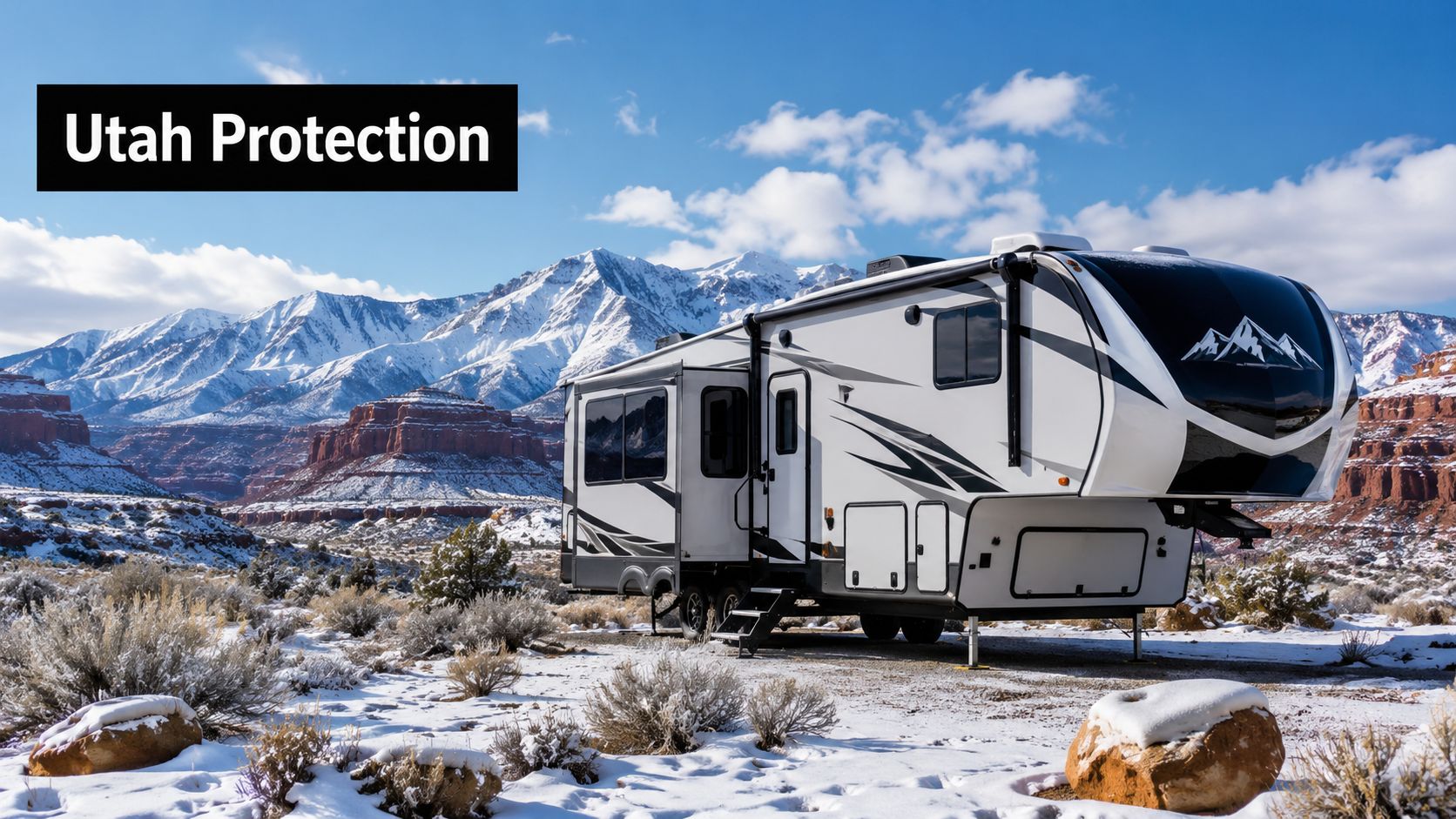
Utah sun is harder on an RV than many owners expect
High-altitude sun is tough on roofs, graphics, sealants, and exposed finishes. That's true in Salt Lake City, and it becomes even more noticeable the farther south you go. Modern cover listings and buying guides show how much attention the market now puts on measurable UV protection and layered construction. One example for a similar towable cover describes a 7-layer non-woven fabric and claims protection against 98.5% of UV-A rays and 99.8% of UV-B rays on the product listing for that multi-layer RV cover.
That doesn't mean every cover performs the same. It does show that a fifth wheel camper cover has become an engineered storage product, not just a loose dust sheet.
Snow and wind create a different kind of risk
Winter storage around the Wasatch Front adds another problem. Snow sits. Then it melts. Then it freezes again. If a cover holds moisture poorly or fits badly, that cycle becomes harder on the trailer instead of easier. Wind also matters more than people think. A cover that shifts and snaps against corners, gutters, ladders, and awning arms can wear itself out and scuff the RV underneath.
Practical rule: A cover should protect the RV from weather. It shouldn't become a moving abrasive layer every time a storm rolls through.
Why we call it a smart investment, not an accessory
A good fifth wheel camper cover helps with several real-world headaches:
- Sun exposure: It helps shield painted and gelcoat surfaces during long storage.
- Debris: It keeps dust, bird mess, and tree fallout off the roof and upper walls.
- Seasonal cleanup: It can make spring prep faster because you're not starting with months of grime.
- Exterior preservation: It reduces direct weather exposure on materials that don't age well when left unprotected.
For Utah owners, the question usually isn't whether the RV needs protection. It's whether the cover you choose is designed for your actual storage conditions.
Decoding Cover Types and Materials
Not all covers fail the same way. Some break down in sun. Some trap moisture. Some fit well enough at first but don't hold up once winter wind gets involved. Material and construction decide a lot of that.
What matters most in cover fabric
The biggest trade-offs are UV resistance, water resistance, and breathability. You want all three, but some covers lean harder in one direction than another.
A basic lightweight cover can be fine for short storage periods in mild conditions. Utah often asks more than that, especially if the fifth wheel lives outdoors for an entire season. For that reason, owners here usually do better with a multi-layer cover rather than the cheapest thin option on the shelf.
Premium fifth wheel covers also tend to add features that help in daily use and long-term wear. Some commercial cover lines highlight scratch-free lining, reinforced strap-and-buckle retention, and zippered access panels, which matter because they reduce movement, protect surfaces, and let you get inside without removing the whole cover, as shown on this premium fifth wheel cover product page.
Fifth Wheel Cover Material Comparison
| Material | UV Resistance | Water Resistance | Breathability | Best For |
|---|---|---|---|---|
| Lightweight polypropylene-style cover | Moderate | Light to moderate | Good | Shorter storage periods, lower-cost protection, dust and debris control |
| Multi-layer synthetic cover | Better | Better | Good to very good | Outdoor storage in mixed Utah weather |
| Heavier roof-focused layered cover | Strong on roof areas | Stronger against snow and rain exposure | Varies by design | Owners prioritizing roof protection during long storage |
| Non-breathable tarp-style material | Poor choice for this use | Can block water directly | Poor | Temporary emergency use only, not seasonal storage |
What works in Utah and what doesn't
For most local owners, we steer the conversation toward a breathable multi-layer cover with reinforced tie-down points. The reason is practical. Utah weather isn't just wet or just sunny. It swings.
What usually doesn't work well is the fully sealed, cheap tarp approach. It looks simple, but it often creates more problems than it solves. It can rub, hold moisture, and fit badly around a fifth wheel's nose, gutters, and roofline.
A few features are worth paying for:
- Zippered door access so you can check the interior without fully uncovering the rig
- Reinforced straps and buckles to cut down on movement
- Softer inner contact surfaces where the cover touches painted or gelcoat areas
- Roof-heavy layering if the trailer will spend winter outdoors
The cover that lasts is usually not the lightest one and not the thickest one. It's the one that balances breathability with enough structure to stay put.
Measuring Your Fifth Wheel for a Perfect Fit
Bad fit is one of the main reasons owners get frustrated with a fifth wheel camper cover. If the cover is too small, it strains seams and leaves exposed areas. If it's too loose, wind grabs it and starts the flap-and-rub cycle that damages both the cover and the RV.
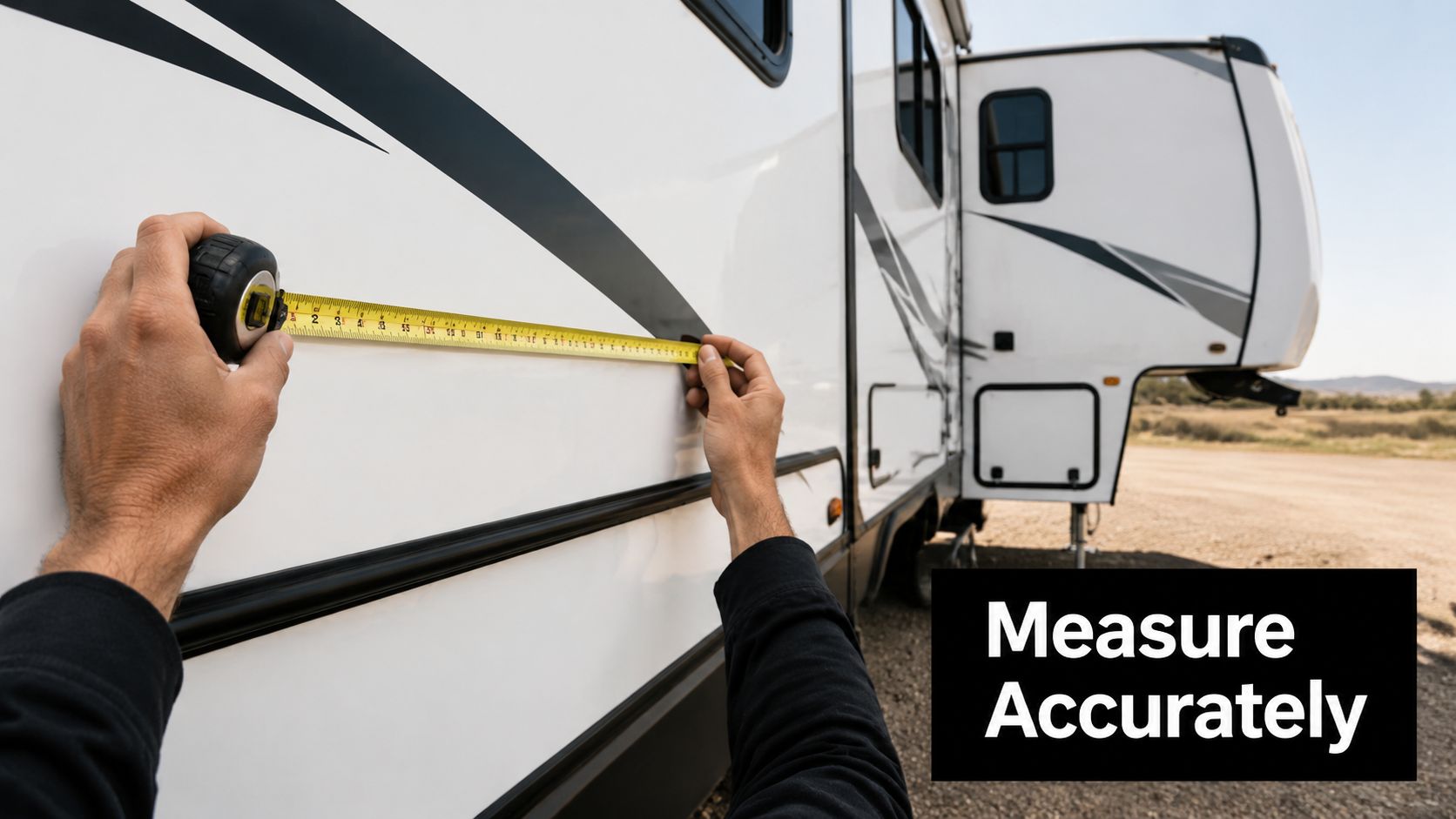
The three measurements that matter
Fit is based primarily on height, length, and width, not just the trailer model name. Industry guidance says to measure height from the roof edge down to the middle of the wheel, length from rear bumper to front bumper, and width across the widest points while excluding side mirrors. It also advises sizing up if you fall between sizes so the cover hangs to mid-wheel instead of stretching tight, as explained in this fifth wheel cover measurement guide.
That “size up” advice saves a lot of hassle.
How our team tells owners to measure
Use a tape measure and write each number down as you go. Don't trust memory once you start shopping.
- Measure the length first. Start at the rear bumper and measure to the front bumper area of the body.
- Check the height. Measure from the roof edge down toward the wheel area.
- Measure the width. Go across the widest part of the body.
If you're newer to fifth wheels, it also helps to understand what parts of the front assembly are part of towing hardware versus the body itself. Our article on the 5th wheel pin box helps clarify that area so you don't confuse towing components with cover fit points.
Common measuring mistakes
We see the same few errors over and over:
- Guessing from the brochure: Model names and floorplans don't guarantee cover fit.
- Buying by “close enough” length: A little too small is usually a big problem once the cover is on.
- Ignoring width on nonstandard rigs: Slide-out geometry, ladders, and accessories can change how a cover sits.
- Choosing a ground-dragging fit: A cover should not be stretched down like a skirt around the entire trailer.
A properly sized fifth wheel camper cover should look snug, not shrink-wrapped.
Pro Tips for Installation and Securing
A cover job goes sideways fast when someone tries it in a canyon wind with a ladder in one hand and a bundle of fabric in the other. Along the Wasatch Front, our team usually tells owners to wait for a calm morning, especially in spring and fall when gusts can turn a cover into a sail. In St. George, the challenge is different. Fine dust gets into everything, so dragging cover fabric across the ground can grind dirt into the material before it ever touches the RV.
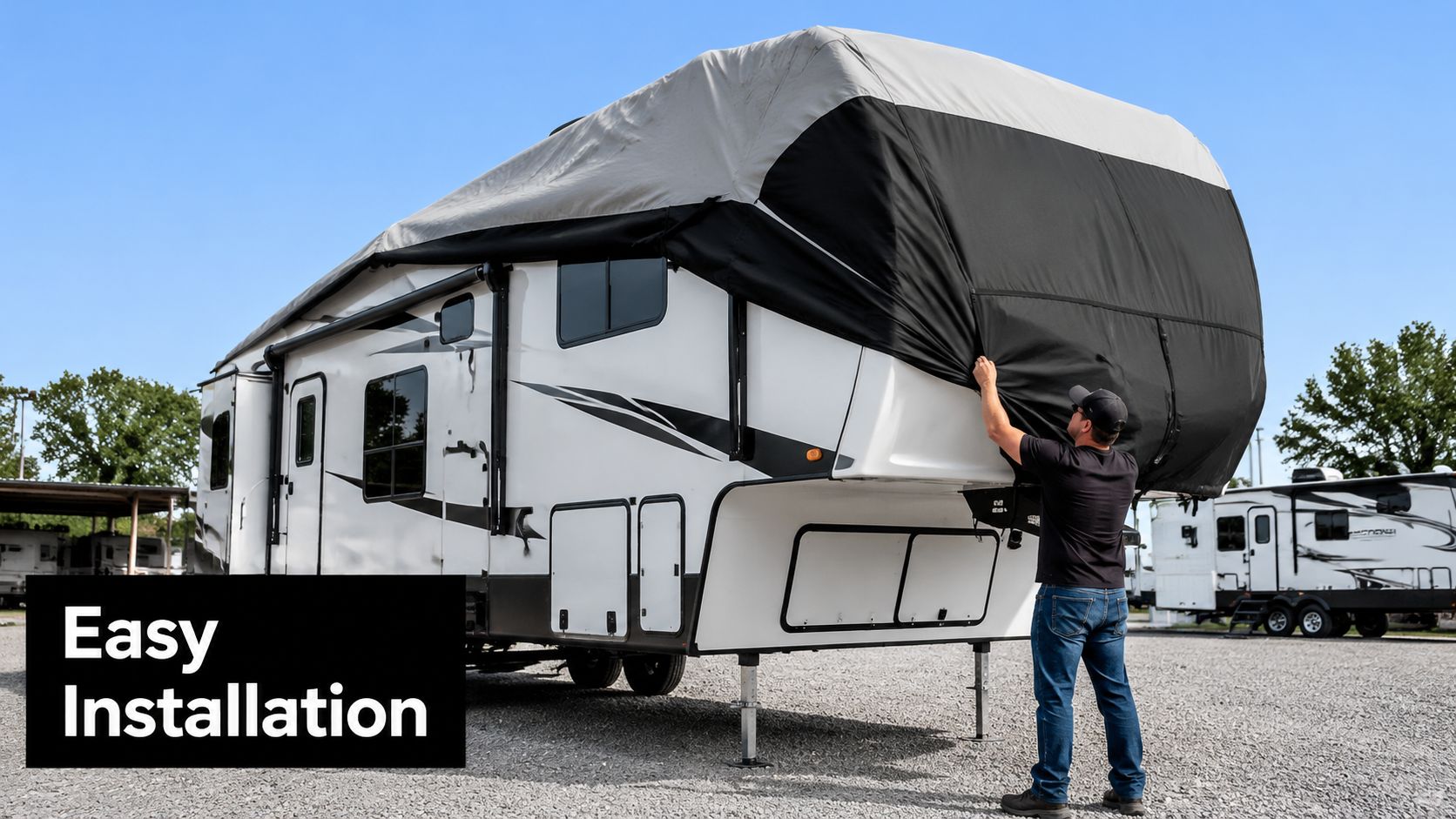
Prep the trailer before the cover goes on
Start with a dry, clean fifth wheel. Grit trapped under a cover rubs on the finish every time the wind shifts, and Utah dust is hard on paint, decals, and corners.
A few minutes of prep saves wear later. Fold in anything that can fold, pad sharp gutter ends or ladder contact points if needed, and close every zipper panel before you start tightening straps. If your rig has solar accessories, rain spouts, or aftermarket add-ons, check where the cover will rest on them before you pull it down tight.
Covers are commonly sold in 2-foot length bands, and buyers usually choose based on actual exterior length instead of a one-size-fits-all approach. Features like reinforced straps and side tensioning are common for that reason, as shown on Walmart's fifth wheel cover category page.
A setup routine that works
The easiest installs follow the same pattern every time. Get the cover on the roof first, then lower it in stages instead of hauling one side down all at once.
- Lay the cover out on a clean surface: Find the front, rear, and any zippered access panels before lifting anything.
- Use two people if you can: One person feeds and centers the cover while the other watches corners, ladders, and spouts.
- Pull across the top first: That reduces snagging and keeps the sidewalls from carrying all the weight.
- Work front to back: Keep the cover centered as you go so the rear panel is not twisted by the time you reach it.
- Lower both sides evenly: Balanced tension helps the cover sit flatter and flap less.
If you want a visual reference before doing it yourself, this walkthrough is useful:
Secure it for Utah weather, not just storage lot conditions
A loose cover might survive a mild climate. It usually does not hold up well through Utah wind, snow loading, and sharp temperature swings.
Tighten the straps enough to remove slack, then stop. Over-tightening is a common mistake. It puts extra stress on seams, corners, and zipper areas, and that shows up later as tearing or premature wear. We see this a lot on rigs stored in open areas north of Salt Lake, where repeated gusts keep tugging at the same points.
Pay extra attention to these spots:
- Front cap: This is the first place crosswinds hit.
- Rear panel: Any loose fabric here will billow and slap.
- Underbody straps at mid-length: These keep the side panels from ballooning.
- Zippered entry panels: They should lie flat without pulling sideways.
- Lower corners: Snow and wind both put extra strain here.
For Utah owners, the actual trade-off is airflow versus movement. You want enough tension to keep the cover from flogging itself apart, but enough breathing room that moisture can still escape and the fabric is not stretched like shrink wrap. Up north, that matters during freeze-thaw cycles. In southern Utah, it matters because high-altitude sun and heat make overstressed material age faster.
Maintenance Storage and Common Problems
A cover needs care too. Owners often buy a good one, use it hard for a season, then stuff it away wet and twisted into a compartment. That shortens its life fast.
Cleaning and storing your cover properly
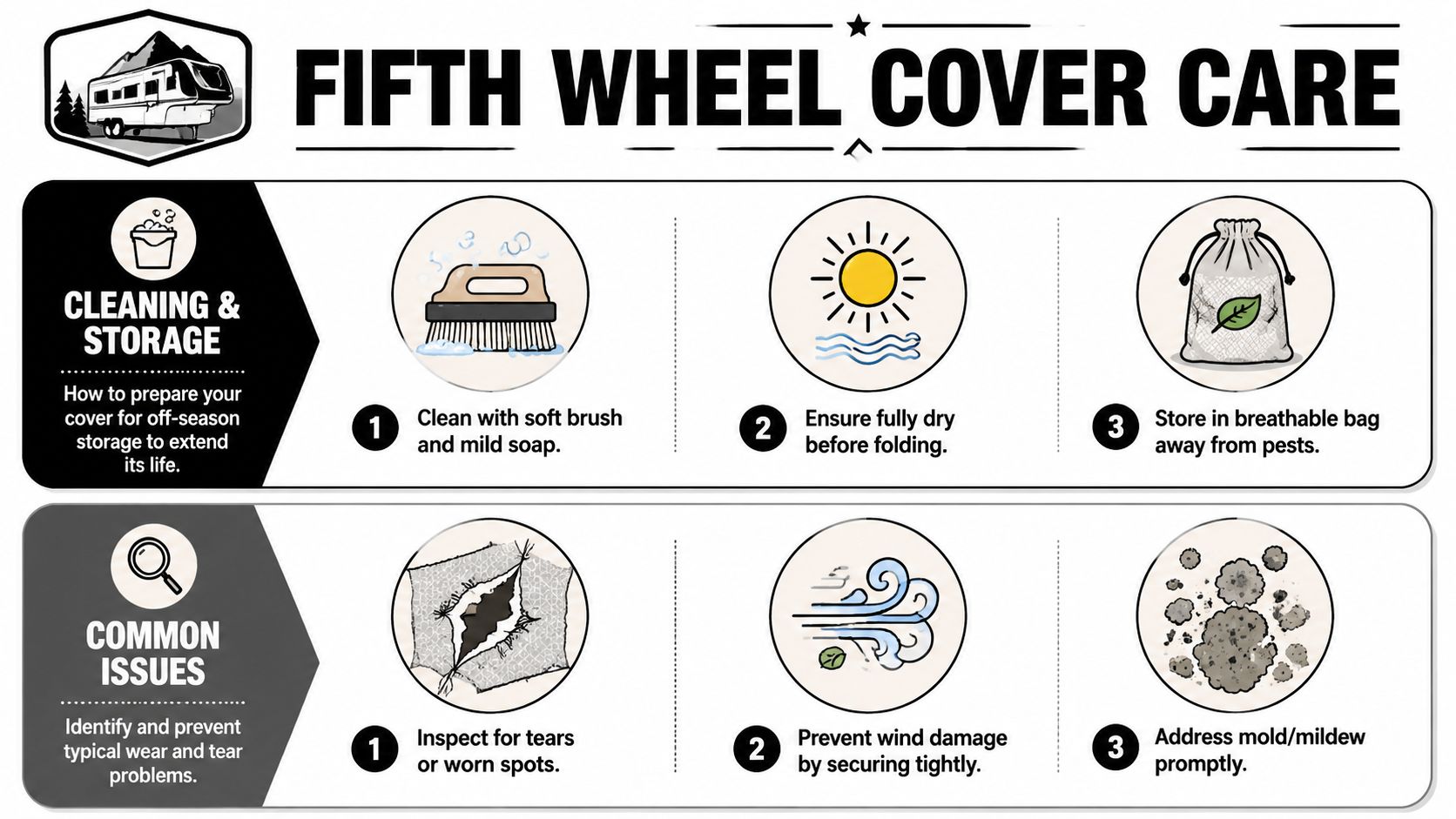
The best habit is simple. When you remove the cover, inspect it before you store it. Look for dirty wear spots, loose stitching, torn corners, and stress around buckle points.
For normal care, keep it basic:
- Use a soft brush: Knock off loose debris before deeper cleaning.
- Wash gently: Mild soap and water usually handle ordinary grime.
- Dry it fully: Never fold and bag a damp cover.
- Store it in a breathable container or bag: A sealed damp bundle is asking for mildew and odor.
The moisture question every owner asks
This is the concern we hear most. Will a cover trap condensation and cause mold or roof damage?
That can happen if the wrong material is used or if the cover is installed the wrong way. DIY guidance specifically warns against a fully sealed tarp because moisture needs ventilation to escape, and it highlights the underexplained question of whether a cover can cause mold or roof damage if used wrong in this video about tarp ventilation and fit.
A breathable cover protects differently than a sealed tarp. One manages exposure. The other can trap a problem underneath.
How to reduce condensation risk
A few habits make a big difference:
- Cover a dry RV, not a wet one: Let the roof and walls dry after washing or storms.
- Allow airflow at the bottom: Don't try to seal the cover to the ground.
- Avoid over-tightening: A little natural hang is better than wrapping the trailer like cargo.
- Check during the season: After storms or long storage periods, inspect under accessible panels.
If you're already doing roof maintenance before storage, it's also smart to inspect and touch up problem sealant areas where needed. Our guide to Dicor self-leveling sealant is a helpful resource for that part of the job.
Common cover problems and what they usually mean
When owners bring up trouble, the symptom often points right to the cause.
| Problem | Likely Cause | What to Do |
|---|---|---|
| Fabric flapping loudly in wind | Cover is oversized or straps are loose | Re-secure and remove slack where possible |
| Worn spots on corners | Sharp edges or repeated rubbing | Pad contact points and inspect fit |
| Condensation underneath | Poor airflow or non-breathable material | Improve ventilation and review cover type |
| Small tear growing larger | Delayed repair | Patch it early before wind enlarges it |
| Cover feels heavy and musty in storage | Stored damp | Dry completely before re-bagging |
A little attention during storage beats replacing a cover early or correcting avoidable exterior scuffs later.
Conclusion Your Partner in RV Protection
The right fifth wheel camper cover does more than keep dust off your trailer. In Utah, it helps your RV handle strong sun, winter weather, wind, and long off-season storage with less wear. The key is choosing a breathable material, measuring accurately, and securing the cover so it stays put without rubbing itself to death.
That's the trade-off generic guides often miss. More material isn't automatically better, and tighter isn't automatically safer. Good protection comes from fit, airflow, and realistic setup for the climate where your fifth wheel resides.
If you want help sorting through cover options, comparing fifth wheels, or getting your RV ready for storage, you can browse our current inventory of fifth wheels or contact our expert service center. We're happy to help Utah owners protect their rigs for the next season of travel.
Frequently Asked Questions
Can I use a travel trailer cover on my fifth wheel
It's not a good idea. A fifth wheel has a different front profile and overhang shape, so a travel trailer cover usually won't fit correctly. Poor fit leads to loose fabric, exposed sections, and more rubbing in the wind.
Should a fifth wheel camper cover go all the way to the ground
No. A properly sized cover should hang around the wheel area rather than sealing everything to the ground. That gap helps airflow and reduces the chance of holding moisture and grime against the lower body.
Do I need separate tire covers too
In many cases, yes. The main cover helps, but dedicated tire covers still make sense if your RV sits outside for long stretches. Tires age from exposure, and separate covers give them more complete shielding.
Can I still get inside the RV with the cover on
Usually, yes, if the cover has zippered access panels. That's one of the most useful features to look for, especially if you check on your RV during storage or keep gear inside over the winter.
Is a tarp good enough instead of a real fifth wheel camper cover
For seasonal storage, no. A tarp may seem cheaper and simpler, but it often lacks the fit and breathability you want around a fifth wheel. That can lead to trapped moisture, fabric movement, and abrasion at contact points.
How often should I check the cover during storage
After major storms, strong wind events, or long periods without use, it's smart to inspect it. Look for loose straps, pooled debris, worn spots, and any signs that the cover has shifted.
If you're shopping for a fifth wheel, preparing one for winter, or need help with service and storage questions, Motor Sportsland is a practical place to start. Browse inventory online, stop by our Salt Lake area showroom, or talk with our service team about protecting your RV for Utah conditions.
