
Campers for Sale Utah: A Local Buyer's Guide for 2026
You can walk onto a Utah lot in February or July and feel it right away, the choices look simple until you start matching them to your truck, your family, and the way you camp. That's where a lot of buyers get tripped up, because a camper that looks affordable on the sticker can get expensive fast once you add payload limits, tongue weight, winter storage, and the reality of mountain driving. If you're searching for campers for sale Utah, the smart move is to start with the numbers, not the floorplan brochure.
Utah's RV market is deep enough that you've got real options, but that also means you need a filter. A bigger dealer network usually gives you more model variety, more used turnover, and more financing choices, which is exactly why shoppers in Salt Lake County and Utah County tend to find more to compare. If you want a local yardstick for how buyers should think, our RV dealers in Salt Lake City guide is a good companion read, and if you're weighing sleeping layouts for a smaller family, the risk guide for 3 berth caravans is worth a look before you get attached to a compact coach.
Picture Yourself Shopping the Right Way
A Utah family of four walks a lot in Millcreek on a bright July afternoon. One kid wants bunk beds, one parent wants a kitchen big enough for real meals, and the other is staring at a truck payload sticker they've never paid attention to before. A solo buyer in Spanish Fork during a winter thaw is in a different headspace, but the same problem shows up fast, too many rigs, too many terms, and not enough clarity about what fits.
That's the part many campers skip. They start with price, then get pulled toward sleeping capacity, then hear a salesperson talk about “dry weight” like it answers everything. It doesn't. The core question is whether the camper, the tow vehicle, and the way you camp in Utah all line up without surprises once you load water, food, propane, tools, and gear.
Practical rule: if you can't say what your truck can carry and what your camper will weigh when loaded, you're shopping blind.
The good news is that the right search order makes this easy. First match the rig to your vehicle. Then read the weight numbers. After that, use dealer filters instead of wandering aimlessly through the lot. If you want a broad benchmark for how Utah's market stacks up, IBISWorld estimates the state's RV dealers industry at $1.4 billion in 2026, with 215 businesses and 1,685 workers (IBISWorld Utah RV dealers industry profile). That scale means there's enough inventory to compare, but only if you shop with discipline.
Camper Types You'll See in Utah
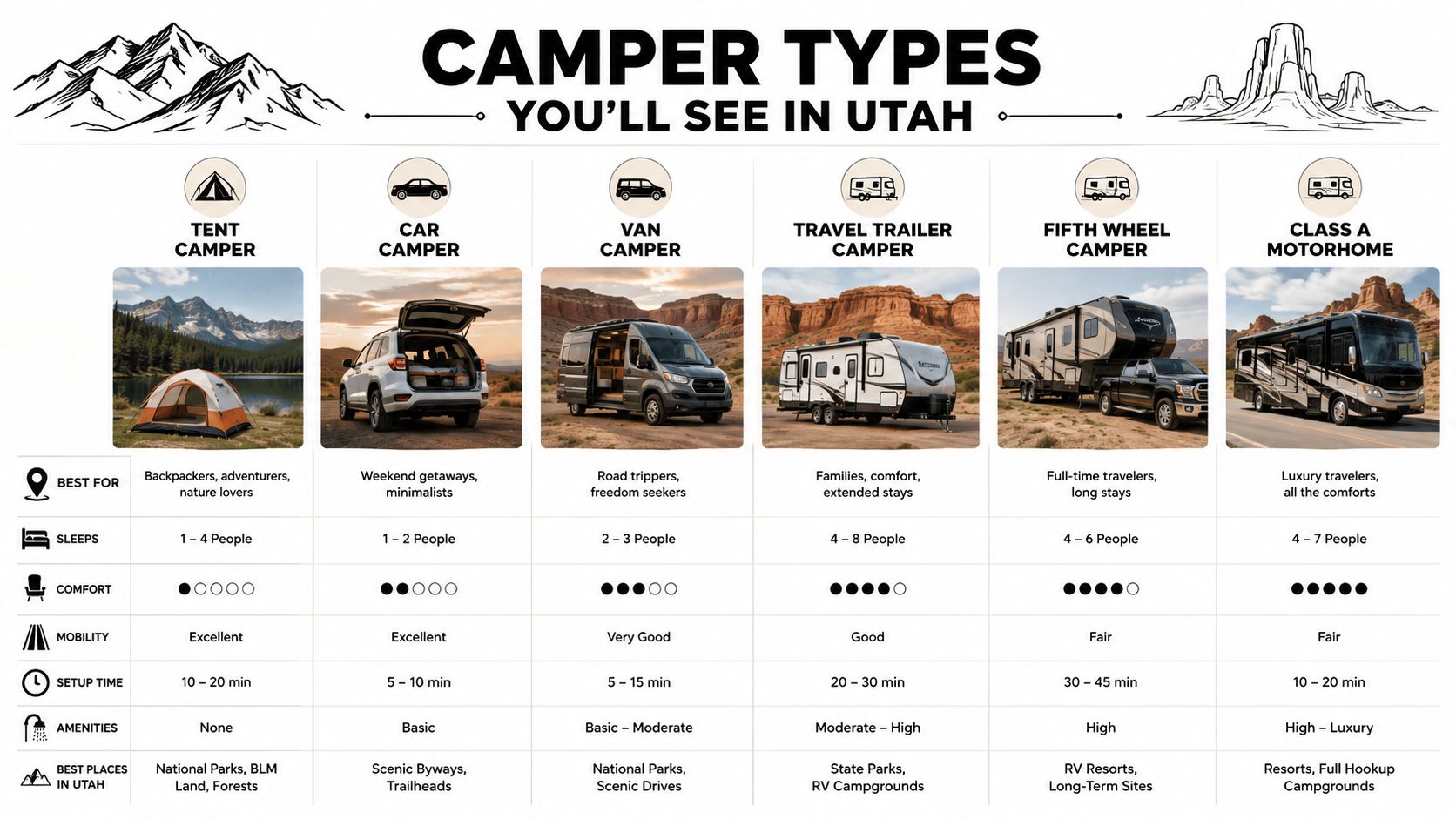
Utah inventory usually circles back to six core types, and each one solves a different problem. The mistake is assuming one category is automatically “better.” It isn't. The right pick depends on how often you travel, where you park, and what your tow setup can handle.
The six types that matter
Travel trailers are the most common starting point for a lot of Utah buyers. They give you broad floorplan choice, good value, and plenty of options for weekend trips to Jordanelle or Bear Lake. The trade-off is simple, they live or die by tow compatibility.
Fifth wheels make sense when you want more residential space and a more settled feel on longer trips. They're usually a better fit for heavier trucks and buyers who don't mind committing to a bigger tow setup.
Toy haulers are the obvious call for buyers who bring bikes, UTVs, or other gear that needs its own space. They work well for Moab and other gear-heavy trips, but they ask more from your truck and your storage plan.
Folding campers are a niche choice, but they still appeal to buyers who want a lighter footprint and simpler storage. They're less about luxury and more about getting outside without hauling a big box behind you.
Motorhomes split into Class A, B, and C. Class B is the tight, nimble option. Class C is the family-friendly middle ground. Class A is for buyers who want a larger road-trip rig and don't mind giving up maneuverability.
Truck campers sit in the pickup bed, which is why they're appealing to some mountain and off-grid travelers. They can be compact and capable, but they ask a lot of the truck itself.
| Camper Type | What It's Good At | Where It Struggles |
|---|---|---|
| Travel Trailer | Flexible layouts, broad price spread, family use | Tow vehicle limits, backing in tight spots |
| Fifth Wheel | Residential comfort, separation of space | Bigger truck requirement, storage |
| Toy Hauler | Gear transport, adventure travel | Weight, fuel use, loading complexity |
| Folding Camper | Smaller footprint, easier storage | Less insulation and fewer amenities |
| Motorhome | Easy camp setup, road-trip comfort | Maintenance complexity, parking |
| Truck Camper | Compact travel, bed-mounted versatility | Payload pressure, center-of-gravity concerns |
A short checklist helps narrow the field fast. How many people sleep in it? Do you need garage space for toys? Will you store it outside through a Utah winter? Can your current vehicle handle the load without drama? If any answer feels fuzzy, keep shopping categories before you shop floorplans.
Sizing Your Camper to Your Truck and Family
The biggest mistake Utah buyers make is confusing length with safety. A long camper doesn't automatically mean a bad fit, and a short one doesn't automatically mean an easy tow. The only thing that matters is how the weight lands on your vehicle once the rig is loaded for real life.
Start with the numbers that actually move the truck
A travel trailer listed in Utah at 34.58 ft has a dry weight of 10,175 lbs, payload capacity of 1,985 lbs, GVWR of 12,160 lbs, and hitch weight of 1,765 lbs (Utah travel trailer listing). That's the kind of unit that can overwhelm a half-ton pickup fast once you add water, propane, batteries, food, and cargo. The hitch weight alone eats into rear axle and receiver limits before you've even loaded the coolers.
Truck campers are a different animal. One Utah listing shows an 18 ft camper at 2,917 lbs with a slide and a 3-sleeper layout, while another 18 ft model is 3,222 lbs and also includes a slide (truck camper example). Those units don't ride on a hitch, they sit in the bed, so the key limit is payload and center-of-gravity placement, not trailer tow rating.
The half-ton question isn't, “Can it pull it?” It's, “Can it carry what the hitch puts back on the truck once the camper is loaded?”
A fast decision framework
- Count the people who'll sleep in the rig most trips.
- List the must-haves like bunk beds, a real bathroom, toy space, or a private bedroom.
- Check your truck's payload plate before you fall in love with a floorplan.
- Compare loaded weight, not dry weight, because your camping gear isn't optional.
- Rule out categories early if the tow vehicle math doesn't work.
| Quick Camper Weight Reference | Typical Dry Weight | Hitch / Bed Weight | Tow Vehicle Class |
|---|---|---|---|
| Travel Trailer | Varies by floorplan | Tongue weight can climb quickly as you load gear | Half-ton, three-quarter-ton, or more depending on size |
| Fifth Wheel | Usually heavier than a comparable travel trailer | Pin weight rides in the truck bed | Three-quarter-ton or one-ton trucks |
| Toy Hauler | Often among the heaviest towables | Higher hitch demand because of cargo space | Heavier-duty trucks |
| Folding Camper | Usually lighter than hard-sided towables | Lower hitch demand | SUVs or lighter trucks in many cases |
| Motorhome | Weight is carried by the chassis | No trailer hitch tow math for the coach itself | Self-propelled chassis class |
| Truck Camper | 2,917 to 3,222 lbs in the Utah examples above | Bed-carrying capacity is the limit | Truck with enough payload margin |
If you want a deeper look at tow math, our how much do travel trailers weigh guide helps you sanity-check what the brochures don't say out loud. My advice is blunt, if the loaded camper pushes your truck into guesswork, move down a category before you move forward with a purchase.
New vs Used and What Each One Really Costs You
New feels safer because nobody else has lived in it. Used feels smarter because the first owner already took the biggest depreciation hit. Both can be the right answer, but they solve different problems for Utah buyers.
The new camper case
New units give you current floorplans, fresh components, and warranty coverage. That matters if you want a very specific layout or you don't want to inherit hidden maintenance issues from someone else's camping habits. It also helps if you're trying to get on the road immediately and don't want to spend your first month fixing what a previous owner ignored.
The used camper case
Used units usually win on upfront price and flexibility. In Utah, that's attractive because a clean used rig with a decent service history can still have years of useful life left. The sweet spot is often a 3-to-7-year-old unit with one careful owner, but only if the roof seals, tires, slide-out, cabinetry, and holding tanks check out clean.
| New vs Used Camper Trade-Offs | New Camper | Used Camper |
|---|---|---|
| Upfront Cost | Higher | Lower |
| Warranty | Stronger coverage | Limited or none |
| Depreciation | Fastest early drop | Slower after the first owner |
| Condition Risk | Lower if it's inspected properly | Higher unless you inspect carefully |
| Availability | Current model-year options | More variety in older layouts |
| Best For | Buyers who want peace of mind | Buyers who want value and know how to inspect |
A lot of buyers get fooled by cosmetic shine. Fresh upholstery doesn't matter if the roof has been leaking or the tires are aged out. If you want a practical inspection walk-through, our how to buy a used RV guide gives you a better lens than a casual walk-around ever will.
Searching Inventory and Reading the Numbers
A smart Utah buyer starts with the numbers, not the photos. If a camper does not fit your truck, your payload, and your family's actual sleep setup, it is a waste of time no matter how clean the upholstery looks.
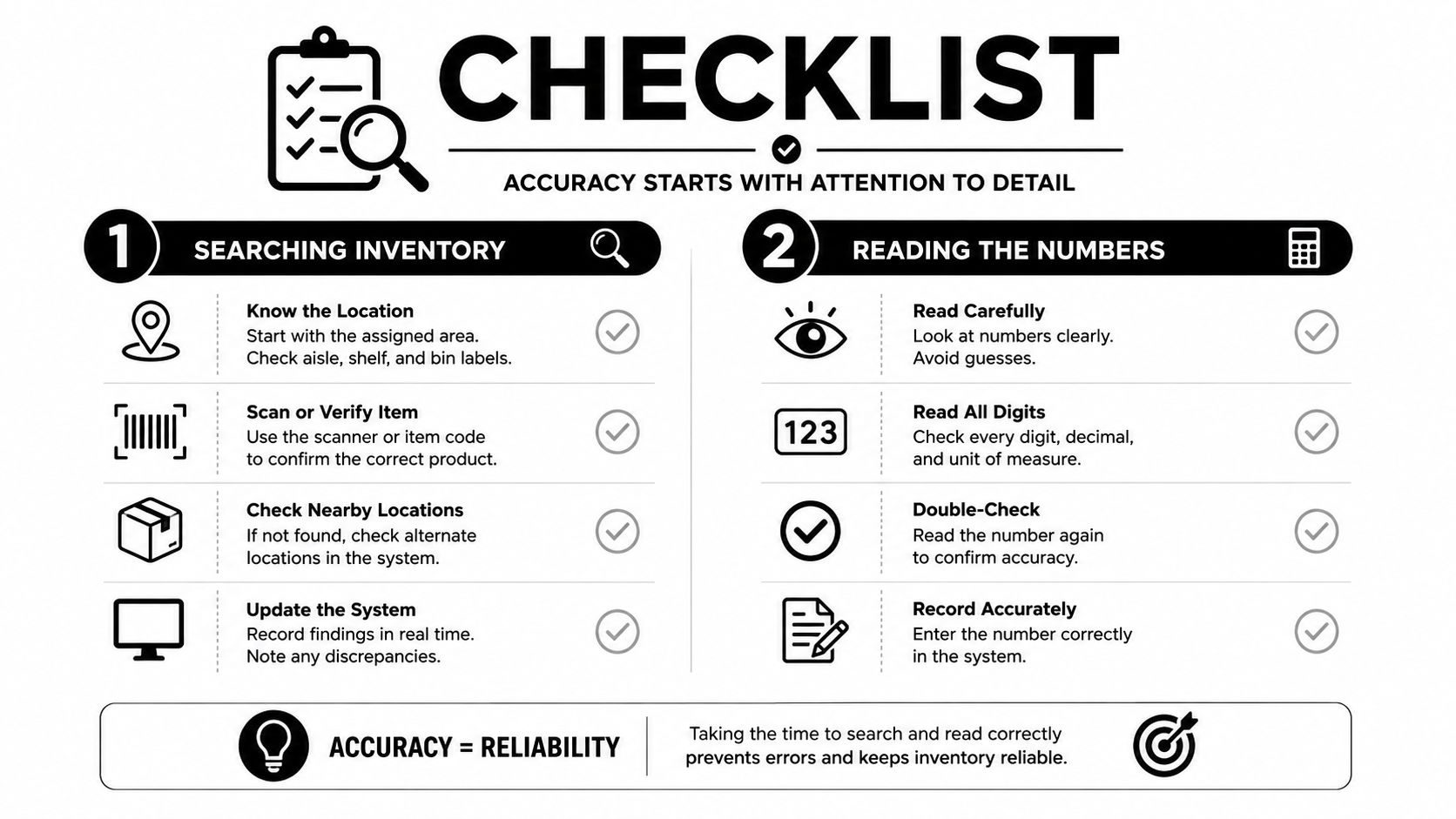
Use filters like a checklist
Start with tow limit or payload limit. That is the first gate. Then sort by sleeping capacity, because a beautiful floorplan does nothing for you if it cannot fit the people who are camping with you. After that, narrow by the features you will use on real trips, such as a bunkhouse, outdoor kitchen, solar prep, or washer-dryer prep.
A useful inventory page should let you compare weight, length, price range, floorplan, and features without making you guess. That is the right way to shop Utah inventory. It keeps you focused on what your truck can handle and what your family can live with through a long weekend or a quick mountain run.
What a Deal of the Week usually means
A Deal of the Week usually points to one of three things, a unit the dealer wants to move fast, a last-year model, or a returned unit that has already been inspected. That does not make it a bad unit. It means you should compare it against similar rigs, ask why the price changed, and make sure the discount is tied to a real reason instead of a hidden problem.
Practical rule: a discounted camper is only a deal if the condition, features, and weight class still fit your use case.
Motor Sportsland's inventory pages at motorsportsland.com let shoppers sort by those basics without guessing. That is the point. If you already know your truck limits, you can cut the field down fast and spend your time on the campers that work for your setup.
Utah Buying Realities Worth Knowing
Utah treats campers broadly. The state DMV defines a camper as any structure designed to be mounted on or affixed to a motor vehicle with a floor and built to provide a mobile dwelling, sleeping place, commercial space, or other human-habitation or camping facilities (Utah DMV campers page). That matters because truck campers and similar units belong in the same conversation as trailers, not off to the side.
Paperwork, insurance, and timing
Registration and titling matter before delivery day, especially if you're buying from out of state or trading in a unit with old paperwork. Insurance also tends to vary by RV class, which makes sense because a self-propelled motorhome isn't the same risk profile as a towable camper. None of that is glamorous, but it's part of owning in Utah.
Seasonally, buyers who shop later in the year or during the shoulder months usually have more room to negotiate, because dealers are more willing to move units when the pace slows. I'd rather see a buyer shop with time on their side than rush into a spring lot frenzy.
Winter and mountain reality
Utah winters punish lazy ownership. You need to think about winterization, storage, and the effect of elevation changes on how a camper feels behind the wheel. Mountain grades don't care what the brochure says, and neither does a cold snap in the driveway.
For pre-trip planning, it helps to use a solid RV pre-trip checklist before every mountain run. That kind of habit saves more trips than fancy trim ever will.
If you're financing, a quick pre-qualification keeps your payment range clear before you fall in love with a floorplan. Trade-ins can also shorten the path to a new rig if your current one is still clean and marketable. The best Utah deals usually go to buyers who show up informed and ready, not buyers who need three more trips to decide what they want.
Keeping Your Camper Road-Ready Year-Round
Utah chews up weak RVs. Sun, snow, dust, and elevation all work on seals, tires, plumbing, and gaskets, so the owners who stay ahead of maintenance get more seasons out of their rigs.
What to stay on top of
Winterize the plumbing before the first hard freeze. Don't wait until it's already cold enough to crack something.
Check roof seals every spring. Water intrusion starts small and gets expensive fast.
Rotate and balance trailer tires. Uneven wear shows up sooner than many expect.
Watch decals and slide-out gaskets for UV damage, especially at higher altitude where sun exposure is brutal.
A camper that's stored dry, inspected often, and winterized on time will usually outlast a neglected rig of the same age.
Motor Sportsland's Service Center handles maintenance checks, repairs, plumbing and electrical work, hitch and brake controller installs, RV parts, and collision repair. That makes local ownership easier because the same team that sold you the rig can also help keep it ready for Bear Lake in July or Goblin Valley in October. If you're comparing service options, use a local shop for the common, recurring stuff and save the specialty trips for jobs that need a different bench.
Frequently Asked Questions and Your Next Step
What's the cheapest camper type for a first-time buyer?
Usually a smaller travel trailer or folding camper, but the right answer starts with your truck, your payload, and where you plan to store it. A cheap sticker means nothing if the hitch weight eats your rear axle capacity or the camper sits too tall for your driveway.
How do I know what my truck can tow?
Read the payload sticker on the door jamb, check the owner's manual, then compare that against loaded camper weight, hitch weight, passengers, gear, and water. That is the math Utah buyers skip, and it is the reason a rig that looks fine on paper feels overloaded in the mountains.
When's the best time to buy in Utah?
Late fall through early spring usually gives buyers more room to negotiate, because dealers are more open to moving units that have been sitting. Use that window to compare floorplans carefully instead of rushing because a listing looks inexpensive.
Can I trade in my old camper toward a new one?
Yes, and it is often the cleanest way to move up if your current unit is still solid and the condition will hold up under inspection. A decent trade can reduce the cash you need upfront and make the switch easier to manage.
How do I get quick financing clarity without wasting time?
Get pre-qualified before you pick a floorplan so you know your payment range and can stay focused on realistic options. That saves time, keeps you from overreaching, and makes the comparison between campers much cleaner.
If you are bringing a dog on the road, the tips for camping with dogs are worth reading before you buy. Pet space matters in a bunkhouse, a compact trailer, and everything in between, especially when you are deciding how much room you really need.
If you are serious about campers for sale Utah, stop chasing random listings and make the numbers work first. Match the camper to your tow vehicle, your payload, and your winter storage plan before you get attached to a floorplan. Motor Sportsland can help with inventory, trade-ins, and financing, and the showroom team will tell you straight which units make sense for Utah use and which ones do not.
